
Hudson's zoning spells out where horses may be kept. The Land Development Code allows them in District 1, District 2, District 3 and District 10, provided the lot has at least two acres and at least one acre for each horse. One or two horses therefore need two acres, and a third horse needs a third. That puts a small private barn within reach on many larger lots in District 1 and across the rural acreage of District 2.
Horses remain a modest presence in the county overall. USDA's 2022 Census of Agriculture found 520 horses and ponies on farms countywide. A private setup usually means a few stalls, a tack and feed room, hay storage and perhaps a run-in shed. Because a horse barn shelters livestock, it can use the code's larger barn footprint instead of the 1,200-square-foot residential cap; height and design review are the tighter constraints, and an indoor arena raises its own questions.
What to know before building in Hudson
Acreage first, then stalls
Count usable acres before settling on a stall count. The rule is a two-acre minimum lot plus one acre per horse, and the house, driveway and lawn sit on part of that land. The barn must also meet the district's accessory setbacks, 15 feet from side and rear lines in District 1, and it cannot be placed in a front or side yard.
Arena spans and the height limit
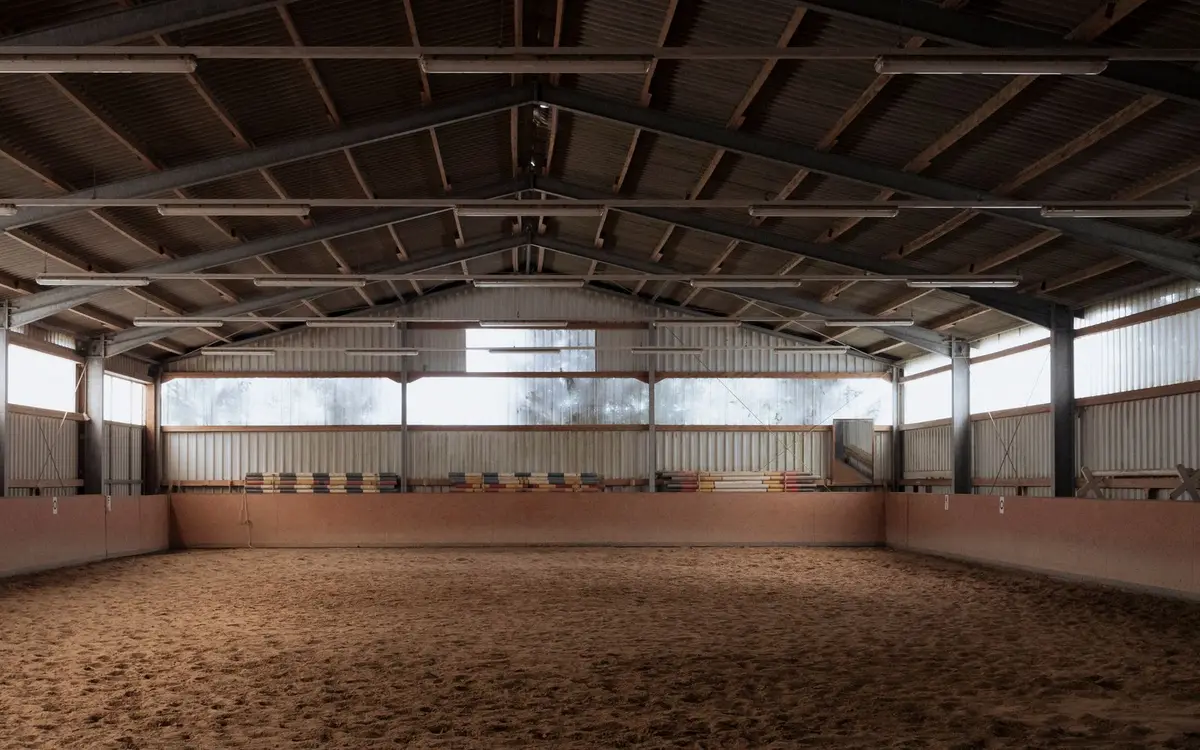
Riding indoors takes a broad clear span and enough headroom for a mounted rider, and a roof that size must carry Northeast Ohio snow without interior posts. Hudson caps accessory structures at 18 feet, and the barn allowance addresses footprint, not height. Before designing an arena we ask the city how the limit applies; a variance from the Board of Zoning and Building Appeals may be needed.
Manure and runoff
Ohio's farm-runoff rules in OAC Chapter 901:13-1 count horses among the regulated animals, and manure that reaches state waters through poor management is treated as agricultural pollution. Hudson drains to the Brandywine Creek, Mud Brook and Tinkers Creek watersheds and protects wellhead areas, so we site the barn, manure storage and downspouts to keep runoff away from ditches and streams.
Private barn or lesson barn
Ohio's building codes do not reach a structure that serves the agricultural use of the land it sits on (ORC 3781.06), and the state building board's exemption flow chart lists horses as livestock. A barn sheltering your own horses beside their pasture is the classic case. An arena used for paid lessons, clinics or shows may be treated differently, so we raise it with the county building office early.
Common horse barns & riding arenas projects around Hudson
- Two- or three-stall barn with a tack and feed room
- Run-in shed for a pasture on District 2 acreage
- Hay storage barn with a loft or a separate hay bay
- Private indoor riding arena, subject to the city's height review
- Barn with a covered manure storage area and full gutters
Horse Barns & Riding Arenas FAQs for Hudson
How much land do I need for a horse in Hudson?
At least two acres, plus at least one acre per horse, in Districts 1, 2, 3 or 10. One or two horses need a two-acre lot; a third horse needs three acres. Other districts, including the Historic Residential Neighborhood and Village Core districts near downtown, are not on the list. Check your parcel's district on the city zoning map before planning stalls.
Will a horse barn go through architectural review?
Usually. Once a barn passes 250 square feet it is no longer minor development, and outside Districts 6 and 8 that puts it in front of the AHBR. A farm building may outgrow the house under the design standards, yet the board will still study the barn's elevations, roof shape and openings.
Can I board other people's horses or give lessons?
That raises classification questions on both the zoning and building code side. District 2 lists commercial recreational or sports training facilities as a conditional use with a 15-acre minimum lot, and the city decides how a given operation is classified. Paid lessons or events can also affect whether the building keeps the agricultural code exemption, so we raise it with both offices early.
About our horse barns & riding arenas
Stall barns, run-in sheds and indoor riding arenas planned around how horses live and work, with stall sizes, airflow and hay storage based on university extension guidance.
Sizes, materials and options