
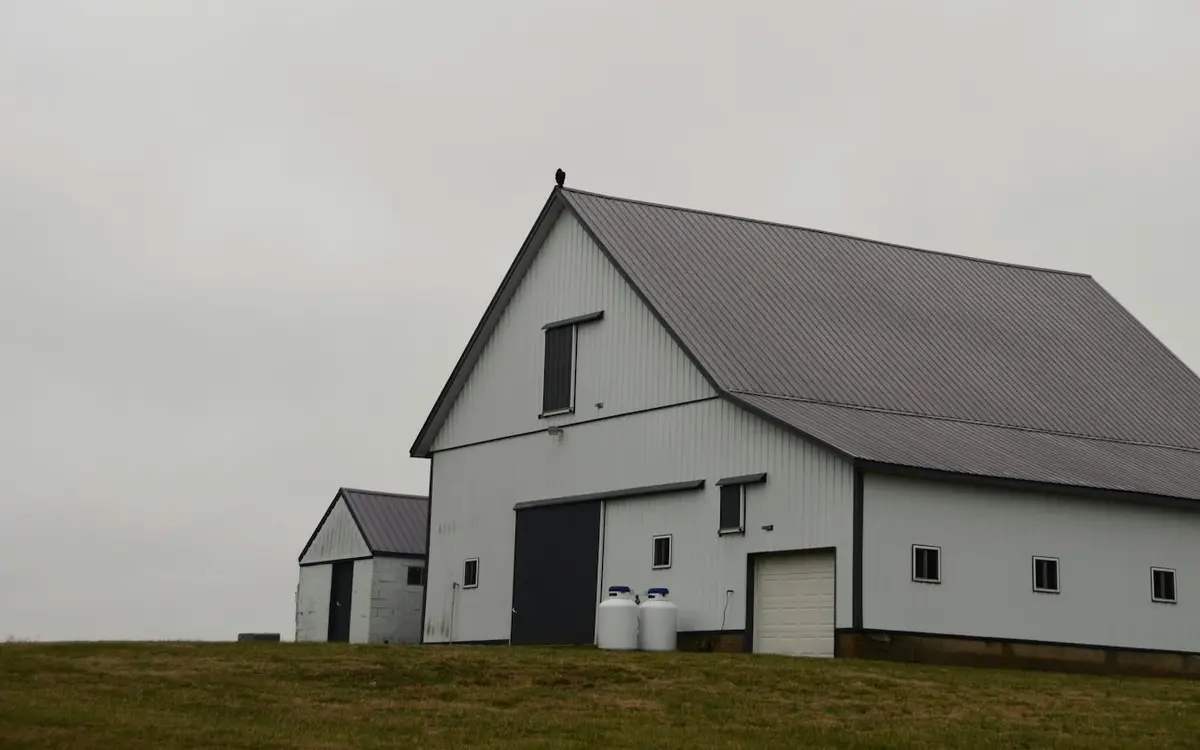
Hudson village and Hudson Township merged into a single city in 1994, and the zoning code still sets aside a district for the most rural part of that land. District 2, Rural Residential Conservation, is described in the code as the area where agriculture, woodlands, wetlands and estate homes predominate, with existing density under one home per five acres. General agricultural operations are permitted there by right, and in Districts 1 and 3 they are possible as a conditional use.
The figure that matters most for a farm building sits in the accessory-structure rules. A building accessory to a house is capped at a 1,200-square-foot footprint, but a barn for an agricultural use may cover up to 10,000 square feet. The code defines a barn as a farm building used to store farm products or shelter livestock, so how you describe and lay out the building decides which limit applies. That is the first conversation we have with Hudson landowners.
What to know before building in Hudson
Barn or accessory building?
The 10,000-square-foot allowance is for a barn serving an agricultural use. A building that mainly holds a riding mower, a boat and a workbench is an ordinary residential accessory structure under the 1,200-square-foot cap. The code's 18-foot accessory height limit has no stated exception for barns, so we confirm the allowable height with the city before designing a tall hay loft.
Design review still applies
Hudson's Architectural Design Standards exempt agricultural uses from the rule that an accessory building be smaller and lower than the house. Other provisions remain, such as borrowing details from the main building, a matching roof shape, and a window or door on any facade over 12 feet long. Plan for the Architectural and Historic Board of Review to see the barn's elevations.
Count the buildings already there
Hudson allows three accessory buildings on a lot of two and a half acres or less and four on larger lots. A property with an old corn crib, a run-in shed and a garage may already be at its limit, so a new barn sometimes means replacing an outbuilding instead of adding one. We inventory the parcel before we sketch anything.
Exempt from the code, not from the weather
Ohio Revised Code 3781.06 takes farm buildings that serve the agricultural use of a property out of the state building codes. That exemption does not touch Hudson zoning or design review, and it does not lighten the snow a roof carries. We still use engineered trusses, and we ask Summit County Building Standards whether your particular barn needs a building permit.
Common agricultural buildings projects around Hudson
- Hay and equipment barn on District 2 acreage
- Small livestock barn with an attached feed room
- Machine shed for a tractor, brush hog and wagons
- Garden and orchard storage building under the 1,200 sq ft accessory cap
- Replacement for an aging outbuilding to stay within the building-count limit
Agricultural Buildings FAQs for Hudson
Where in Hudson can I build a farm barn?
General agricultural operations are permitted by right in District 2, Rural Residential Conservation, and as a conditional use in Districts 1 and 3, which means Planning Commission approval after a staff recommendation. District 2 also has a two-and-a-half-acre minimum lot for conventional development. The zoning map on the city's Land Development Code page shows your parcel's district, and we check it before quoting.
Does a farm building go to the Architectural and Historic Board of Review?
In most of the city, yes. Hudson treats residential accessory structures over 250 square feet as basic development, and the AHBR reviews new structures except minor development and projects in Districts 6 and 8. The board meets twice a month, so we build its calendar into the schedule and prepare elevations that show trim, openings and roof shape.
Can I keep chickens or bees without farm zoning?
Yes, as a hobby farm accessory to your home. Hudson allows up to twelve hens, with the coop in the rear yard at least 25 feet from property lines and 50 feet from any structure suitable for occupancy, and beehives follow the same distances. More than twelve chickens is regulated as a general agricultural operation, and breeding or selling from the property is not allowed.
About our agricultural buildings
Post-frame farm buildings for equipment, hay, grain and livestock, sized to your machinery and engineered for the snow and wind loads at your site.
Sizes, materials and options