
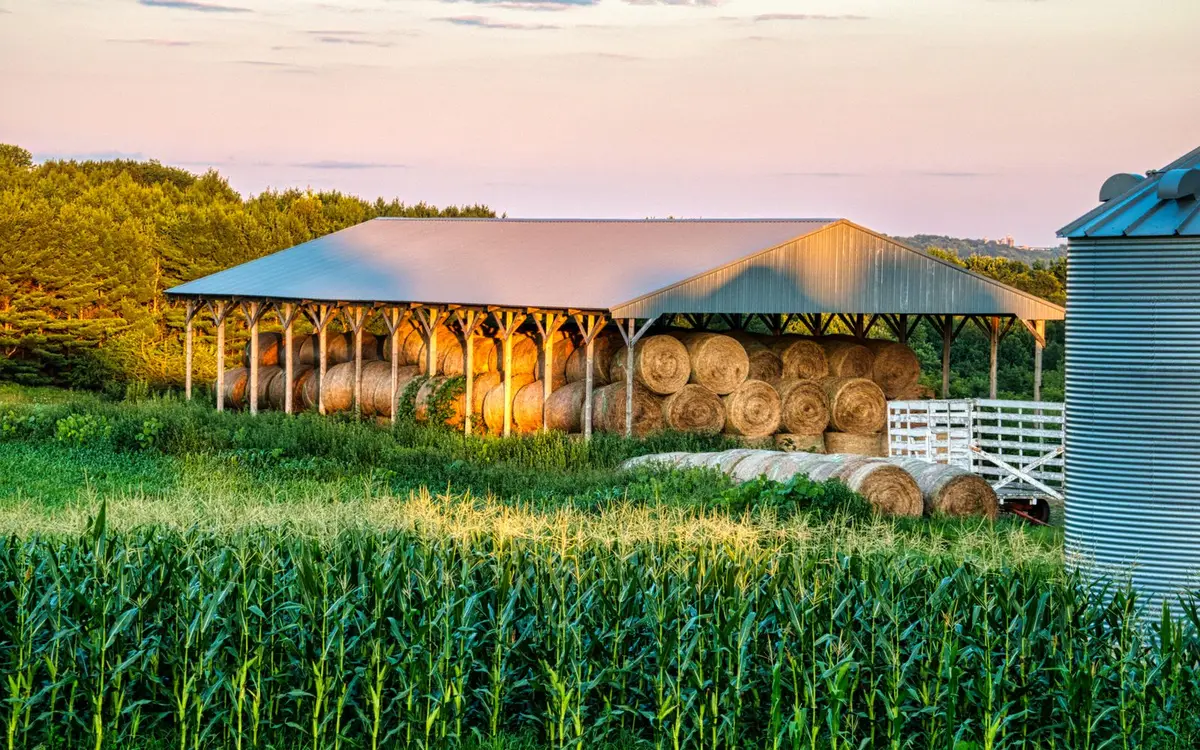
Stow's 2026 zoning code draws a clear line around agriculture. As a principal use, it is permitted only in the O Conservation district, which protects river valleys, woodland and land prone to flooding or high water tables, and which carries a three-acre minimum lot and a 10 percent building coverage cap. In the R-1, R-2 and R-3 residential districts, the code allows accessory agriculture instead, meaning gardens, beekeeping and coops that are incidental to the home.
That shapes what an agricultural building in Stow usually is: a garden and equipment building, a coop, or a storage shed with a potting room, sized within the residential accessory formula. A working hay or livestock barn is a better fit on O-district land where the site allows it, or on acreage in a nearby township such as Brimfield in Portage County, where Ohio law limits how townships can zone farming. We will tell you plainly which side of that line your project falls on.
What to know before building in Stow
The accessory area formula
Stow sets the combined area of accessory buildings on a residential lot at 800 square feet per acre plus 400. Half an acre therefore allows 800 square feet across all buildings, and two acres allows 2,000. Garden buildings, sheds, detached garages and even chicken runs count against that number, so we tally what already stands on the lot before sizing anything new.
Coop placement and size
Coops and runs must sit at least 25 feet from every property line and behind the house or beside it on an interior side. The code calls for at least four square feet per bird inside the coop and ten in the run. On lots under half an acre, the coop and run must be screened from adjacent property, and manure cannot be stored within 20 feet of a lot line.
The O district has its own limits
Agriculture is permitted in the O Conservation district, but that district exists to protect river valleys, forest and land unsuited to intensive development. Buildings there need 80-foot front and street-side setbacks and 25-foot interior side setbacks, and may cover only 10 percent of the lot. Floodplain and wetland rules apply too, so we review the maps before promising a building site.
When the state exemption helps
Ohio Revised Code 3781.06 lifts state building code requirements from buildings that are incident to farming the land they stand on. Stow zoning still controls where the building goes, and the state Board of Building Standards treats a building that mixes farm use with unrelated commercial or residential use as within the codes. Whether a building on a residential lot qualifies is a question for the Stow Building Department.
Common agricultural buildings projects around Stow
- Garden tool and potting building within the accessory area formula
- Chicken coop and covered run set 25 feet from property lines
- Beekeeping equipment and honey extraction shed
- Storage building for a small orchard or market garden
- Hay and equipment barn on O-district or township acreage
Agricultural Buildings FAQs for Stow
Can I keep livestock in Stow?
Stow's 2026 code permits agriculture as a principal use only in the O Conservation district. Residential districts allow accessory agriculture limited to gardens, beekeeping and coops for birds or small animals such as rabbits. The code treats a use it does not list as prohibited unless the Planning Director interprets it into a listed category, so ask Planning & Development before buying animals.
How many beehives can I keep?
Up to eight on an R-1 lot, six on R-2 and four on R-3, all in the rear yard. The back of a hive must be at least six feet from neighboring residential property or a road, the sides 15 feet and the front 25 feet, and the entrance cannot face a neighbor's home. You must also post your Ohio Department of Agriculture registration on or near the hives.
How much farming is left in Summit County?
Some, mostly on small parcels. The 2022 Census of Agriculture counted 413 farms in Summit County averaging 37 acres, and half of them had between 10 and 49 acres. Nursery, greenhouse, floriculture and sod made up about $5 million of the county's roughly $9.7 million in crop sales, and hay and haylage covered more acres than any other crop.
About our agricultural buildings
Post-frame farm buildings for equipment, hay, grain and livestock, sized to your machinery and engineered for the snow and wind loads at your site.
Sizes, materials and options