
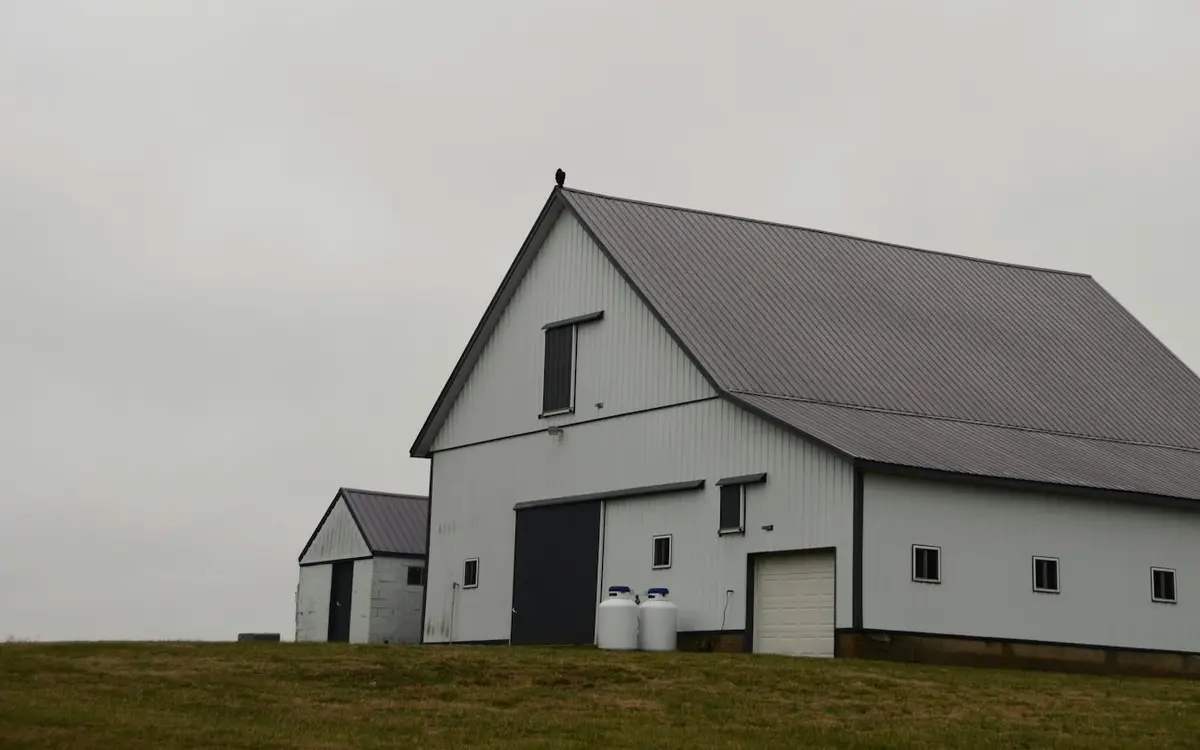
Stark County is still farm country once you leave Canton's city limits. The 2022 Census of Agriculture counted 1,431 farms on about 125,000 acres in the county, and nearly half of those farms are between 10 and 49 acres. Milk was the county's largest livestock sales category, and nursery, greenhouse and vegetable sales ranked among the top dozen counties in Ohio. That is the range of operations we design for around Canton: a dairy that needs another hay barn, a horse property in a township, a family growing produce for a farm stand.
We lay out agricultural pole barns around how the place is actually worked: clear spans wide enough for a tractor and baler, sidewall heights for your tallest equipment, and ventilation for animals. Because most farm ground near Canton sits in Jackson, Perry, Plain and the other townships rather than inside the city, zoning runs through a township office, and Ohio's agricultural exemption may apply. We sort that out before any posts go in.
What to know before building in Canton
The exemption starts with a zoning certificate
Under Ohio Revised Code 3781.061, a building is exempt from the state building code sections once a township or county zoning inspector issues a zoning certificate declaring it will be used in agriculture. In Stark County's townships, that certificate comes from the township zoning office. The statute names township and county inspectors only, so inside Canton city limits, ask the City of Canton Building Department how a barn will be treated before planning around an exemption.
Small acreage can still be regulated
ORC 519.21 bars townships from prohibiting agriculture, but it carves out platted subdivisions and areas of 15 or more lots. There, a township can set setbacks, height and size limits for farm buildings on lots between one and five acres, and can regulate agriculture itself on lots of one acre or less. If your parcel is in a subdivision, we check the township resolution before settling on a barn size.
Selling what you grow
Thirteen percent of Stark County farms sold directly to consumers in the 2022 census. If your barn will double as a farm stand, the Ohio Board of Building Standards guidance treats it as exempt only when at least half of the gross income from sales in the building comes from products raised on farms you own or operate. Selling mostly other people's goods puts the building back under the code.
Dairy and cattle barns
Livestock barns need different details than storage barns. We plan ridge and sidewall ventilation to move moisture out during closed-up winter months, curtain or panel openings for summer air, and post spacing that keeps feed alleys and pens clear. Stalls, gates and alley widths get laid out with you on paper before we fix the post grid, because moving a post later is far harder than moving a line on a drawing.
Common agricultural buildings projects around Canton
- Hay and straw barns with wide gable-end doors
- Horse barns with stalls, a tack room and a run-in lean-to
- Open-sided shelters for heifers or beef cattle
- Machinery sheds sized for a tractor, planter and baler
- Farm stand and produce packing buildings
- Nursery and greenhouse supply storage
Agricultural Buildings FAQs for Canton
Do I need a building permit for a farm pole barn near Canton?
Possibly not, if the barn is used for agriculture and sits in a township. Ohio law exempts a building from the state building code once a township or county zoning inspector issues a zoning certificate declaring it agricultural. You still need that certificate from the township, and if the building's use later changes to something that isn't agricultural, it comes back under the code. We help you describe the farm use clearly when you apply.
Is there a minimum acreage for the agricultural exemption?
ORC 3781.061 doesn't set one; it turns on the agricultural use and the zoning certificate. Lot size matters for township zoning, though. In platted subdivisions, townships can regulate agriculture on lots of an acre or less and can limit farm buildings on lots of one to five acres. Beyond five acres, those subdivision limits don't apply. Your township zoning inspector makes the call for your parcel.
What should I have ready before you quote a farm barn?
The parcel address and township, what the building will house, and the largest machine that has to fit through the door. If you want the agricultural exemption, tell us early so the zoning certificate application describes the farm use accurately. Photos of the site, especially slopes and where water runs after a storm, help us plan grading, door placement and where the building should sit.
About our agricultural buildings
Post-frame farm buildings for equipment, hay, grain and livestock, sized to your machinery and engineered for the snow and wind loads at your site.
Sizes, materials and options