
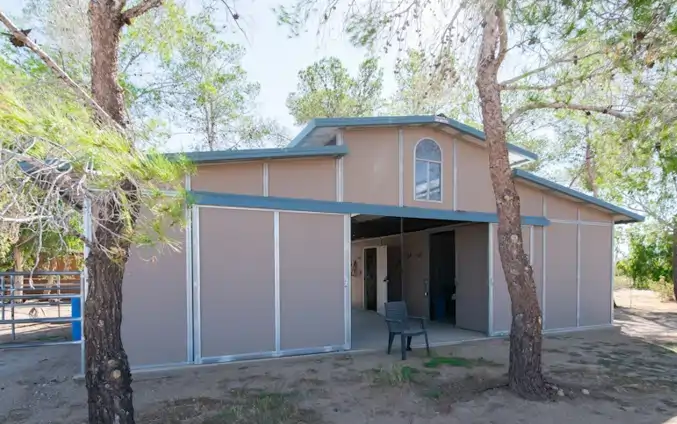
Farming in Erie County has its own mix. The 2022 Census of Agriculture counted 1,052 farms in the county, with crops making up 88 percent of sales. Hay and forage cover the most acres, followed by corn and soybeans, and the county's roughly 12,600 acres of grapes are more than 80 percent of Pennsylvania's total, much of it in the Concord belt that runs along the lakeshore through North East.
That mix shapes the agricultural pole barns we design for Erie-area farms. Hay needs dry, ventilated bays and enough eave height for a loaded wagon. Vineyard operations need somewhere to park tractors, sprayers and harvesters through a long winter. Every roof here also has to carry lake-effect snow, so we design to the ground snow load your township's code agency uses instead of carrying over a number from our Ohio work. Before you apply for anything, we also help you work out whether your barn qualifies for Pennsylvania's agricultural building exemption.
What to know before building in Erie
Know exactly what the farm exemption covers
Pennsylvania's UCC regulations exclude agricultural buildings, defined as structures used to store farm implements, hay, feed, grain or other farm products, or to house livestock and poultry. The definition leaves out habitable space, space where products are processed, treated or packaged, and any place the general public occupies. A barn that later becomes a farm market, tasting room or packing area may need a full UCC permit, so plan for the end use now.
Zoning still applies to exempt barns
The exemption is from the construction code, not from zoning. Fairview Township, for example, requires a zoning permit for any roofed structure. Setbacks, stormwater rules and height limits can still decide where a large barn sits on your parcel, so we talk with the township before the footprint is final and ask whether it wants any paperwork documenting the exemption.
Wide roofs and drifting snow
A clear-span farm building puts a lot of roof area on each truss. With Erie averaging around 100 inches of snow a season, we pay close attention to truss spacing, purlin sizing and the step where a lean-to meets the main roof, because snow drifts deepest at that change in height. Where the site allows, we also keep the main doors out of the path of sliding roof snow.
Hay storage and spring thaw
Hay is the county's largest crop by acreage, and stored bales need airflow and a dry base. Ridge vents or open eaves help moisture escape, and a raised gravel pad or concrete floor keeps bales off ground that turns soft during the spring melt. If hay and equipment will share one building, it is worth discussing a partition between them.
Common agricultural buildings projects around Erie
- Hay and straw storage barns for forage growers
- Equipment sheds for vineyard tractors, sprayers and grape harvesters
- Machinery storage for corn and soybean operations
- Loafing sheds and small livestock barns
- Storage buildings for nursery and greenhouse growers
- Lean-to additions on existing barns
Agricultural Buildings FAQs for Erie
Do I need a building permit for a farm pole barn in Erie County?
If the building meets Pennsylvania's definition of an agricultural building, the Uniform Construction Code does not apply, so a UCC building permit is not required. Your township can still require a zoning permit and enforce setbacks, floodplain and stormwater rules. Call the township office before construction starts; we can help put together the site plan they ask for.
What if I want to sell produce or wine out of the barn?
Then that part of the building likely loses the exemption. The state definition excludes spaces where agricultural products are processed, treated or packaged, as well as any place of occupancy by the general public. A farm stand, tasting room or packing area generally needs a UCC permit. Tell us early so the structure, exits and floor plan are designed with that use in mind.
How far do you travel to build in Erie County?
Erie is about 125 miles from our Tallmadge shop, roughly two and a half hours by road. Because it is a real trip, we schedule Erie County work carefully, confirm materials and site readiness ahead of time, and plan around winter weather. Tell us your township when you call so we can confirm who handles zoning and inspections for your parcel.
About our agricultural buildings
Post-frame farm buildings for equipment, hay, grain and livestock, sized to your machinery and engineered for the snow and wind loads at your site.
Sizes, materials and options