
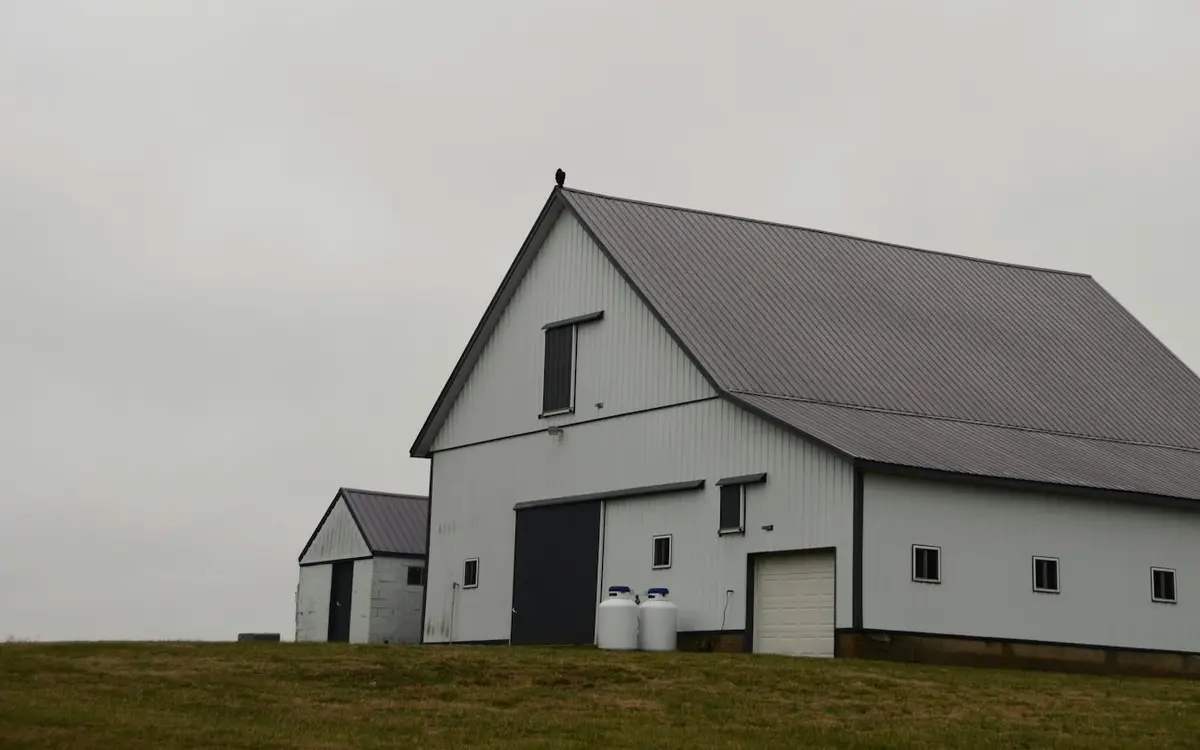
Few cities in Summit County zone land for farming, but Cuyahoga Falls does, a legacy of its 1986 merger with Northampton Township, the first merger of a city and a township in Ohio. The General Development Code describes the old Northampton area as rural in character, and its R-R Rural Residential district provides for agricultural and residential uses on lots of eight acres or more. General farming is a limited use in R-R and in the NP-1 National Park district, and farming that is not tied to a home on the same lot needs at least 16 acres.
On a rural lot the code is generous with barn space: 1,200 square feet of accessory building per acre, up to 20,000 square feet, with a 35-foot height limit and 50-foot side and rear setbacks. Summit County's farms are small, averaging 37 acres in the 2022 Census of Agriculture, and more of the county's cropland goes to hay and haylage than to soybeans or corn.
What to know before building in Cuyahoga Falls
Lot type sets the building budget
Only the rural lot type gets the 35-foot height and the per-acre allowance up to 20,000 square feet. A 1.5-acre large lot in R-1 is held to 1,000 square feet of accessory building per acre, two buildings at most and 15 feet in height. Attached garage floor area counts against those totals, so we tally the existing buildings first.
Set back from the road, fewer design rules
In the R-R, R-1 and NP-1 districts, the residential design standards reach an accessory building over 80 square feet only when it sits less than 80 feet from the right-of-way. A barn placed deeper on the lot is not held to the siding and roof standards that govern suburban garages, which is a good reason to look at a building site well back from the road.
Stream corridor buffers
Cuyahoga Falls protects stream corridors with buffers measured from the ordinary high water mark. Along the Cuyahoga River the combined buffer is 300 feet on each side, and smaller streams carry buffers of 30 to 100 feet depending on how much land drains to them. If a creek crosses your land, the buffer lines go on our site plan before the barn does.
The exemption is state law, the zoning is local
Ohio's agricultural building exemption in ORC 3781.06 applies to the state building code, not to Cuyahoga Falls zoning. The city still issues a zoning certificate for every accessory structure. Summit County Building Standards, which serves the city under contract, is the office to ask whether a particular barn qualifies as exempt from the building permit.
Common agricultural buildings projects around Cuyahoga Falls
- Hay barn on an R-R rural lot
- Tractor and implement building set more than 80 feet back from the road
- Small livestock barn on a rural lot
- Feed and equipment storage for a hobby farm
- Beekeeping and garden supply building on acreage
Agricultural Buildings FAQs for Cuyahoga Falls
Can I farm in Cuyahoga Falls?
In parts of the city. The R-R Rural Residential district is intended for agricultural and residential uses on lots of eight acres or more, and general farming is a limited use in R-R and NP-1. Farming not associated with a home on the lot needs 16 acres. Most of the city is zoned for suburban and urban housing, where animals such as goats and chickens are generally not permitted.
How big can a barn be on a rural lot?
On a rural lot the code allows 1,200 square feet of accessory buildings per acre, to a maximum of 20,000 square feet, and accessory buildings up to 35 feet tall. A 10-acre parcel, for example, could carry 12,000 square feet of accessory buildings, subject to the 5 percent lot coverage limit and the 50-foot side and rear setbacks.
Can I sell what I grow from a farm building?
Within limits. Cuyahoga Falls treats agro-business and agritourism as a limited use in R-R and NP-1, on lots of 16 acres or more, accessory to an ongoing farm, with at least 75 percent of net sales from products or services produced on site. Separately, the state building-code exemption ends if a building is used in retail trade and less than half of its sales are the seller's own farm products.
About our agricultural buildings
Post-frame farm buildings for equipment, hay, grain and livestock, sized to your machinery and engineered for the snow and wind loads at your site.
Sizes, materials and options