
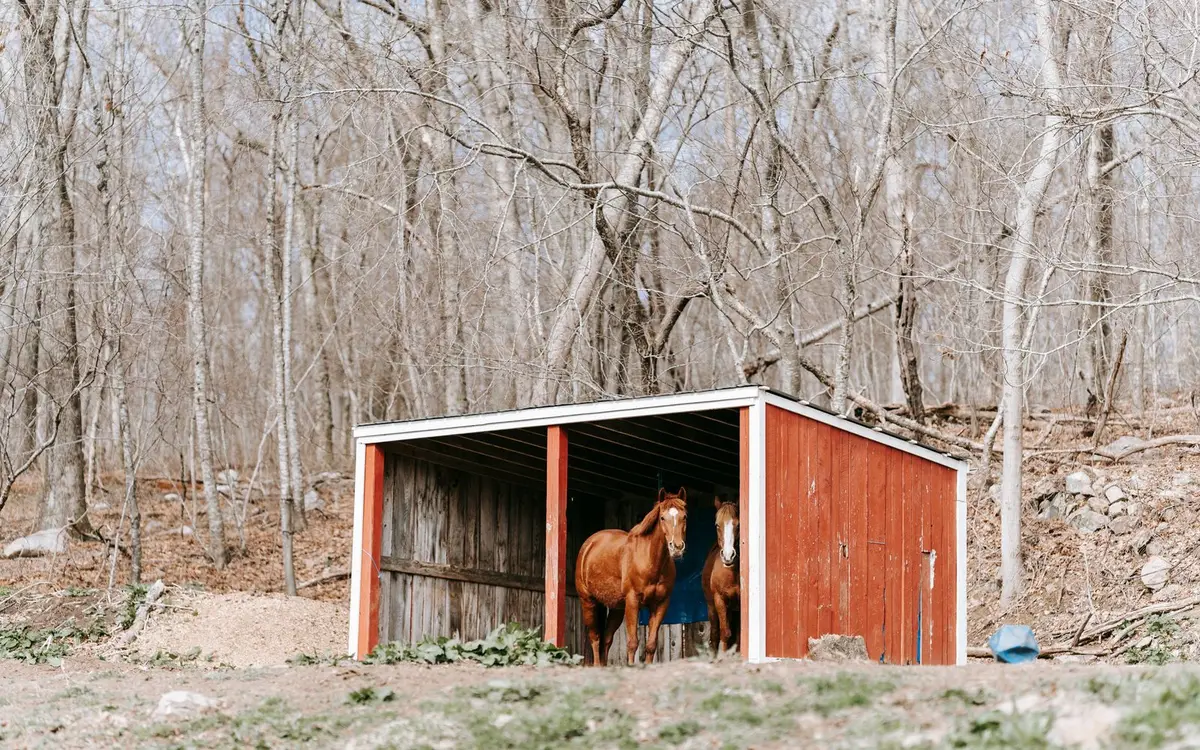
Horses are not ruled out in Cuyahoga Falls, but they are confined to the city's largest lots. The General Development Code groups keeping and raising horses and other farm animals under 'Animal Services, Large.' It is an allowed use in the R-R Rural Residential and NP-1 National Park districts and a limited use in R-1 Large-Lot Residential, where boarding horses requires a lot of at least two acres with an acre for every horse, and any building that houses animals must sit 50 feet from every lot line. The city's other residential districts do not list it.
Summit County is not big horse country. Its farms reported just 520 horses and ponies in the 2022 federal agriculture census, a fraction of the 2,421 reported next door in Portage County. That leaves the rural lots on the Northampton side of the city as the realistic place to stable horses inside city limits.
What to know before building in Cuyahoga Falls
Fifty feet from every lot line
In R-1 the animal building setback is 50 feet on all sides. On a 150-foot-wide large lot, the minimum width for that lot type, that leaves a 50-foot-wide strip for the barn, so the barn will likely run lengthwise down the lot. We lay the setback over your survey before choosing a barn width.
Boarding rules and acreage
The R-1 standards also say animal boarding must be accessory to a home on the lot, and that keeping more than five domestic animals or any farm animals belongs on rural lots of more than five acres. How that line reads alongside the two-acre horse rule is a question for the Planning Division, so we raise it before you buy or design.
Floors and footing
The city's garage design rules require a concrete floor in buildings over 280 square feet unless the building is used for animal husbandry, so a stall barn can use the stone, clay or mat floors horses need. We still pour concrete for the wash stall and tack room, and grade the pad so water drains away from the stalls.
Arenas use up the accessory allowance
On a rural lot, accessory buildings are limited to 1,200 square feet per acre. A 60-by-120-foot indoor arena alone is 7,200 square feet, which uses the allowance of six acres before any barn is counted. Arena trusses also carry a large snow load, so size and span get settled before the stall barn is designed.
Common horse barns & riding arenas projects around Cuyahoga Falls
- Run-in shed placed 50 feet from all lot lines on an R-1 parcel
- Four-stall barn with tack room on an R-R rural lot
- Indoor riding arena sized within the rural lot accessory allowance
- Hay and shavings storage building
- Horse barn on acreage in a nearby township
Horse Barns & Riding Arenas FAQs for Cuyahoga Falls
How many horses can I keep in Cuyahoga Falls?
Where the R-1 limited-use standards apply, the code requires a lot of at least two acres and one acre for every horse, so a three-acre parcel works out to three horses at most under that rule. The same section ties farm animals in general to rural lots over five acres, so ask the Planning Division how both lines apply to your parcel. Other residential districts do not list horses.
Is a riding arena exempt from the building code?
A private arena used for your own horses on agricultural land can fall under Ohio's agricultural exemption in ORC 3781.06, because state guidance lists horses among livestock. Add paying spectators or public events and the arena is partly commercial; the board's guidance puts that kind of mixed-use structure back under the building code. For property in Cuyahoga Falls, that determination belongs to Summit County Building Standards.
What about manure on a small horse property?
Ohio's agricultural pollution rules count horses as animals, and a dirt lot without vegetative cover is treated as an animal feedlot. Soil and water conservation districts investigate pollution complaints on behalf of the Ohio Department of Agriculture. Keeping the manure pile and dry lot outside the city's stream corridor buffers, and away from neighbors, keeps complaints from starting.
About our horse barns & riding arenas
Stall barns, run-in sheds and indoor riding arenas planned around how horses live and work, with stall sizes, airflow and hay storage based on university extension guidance.
Sizes, materials and options