
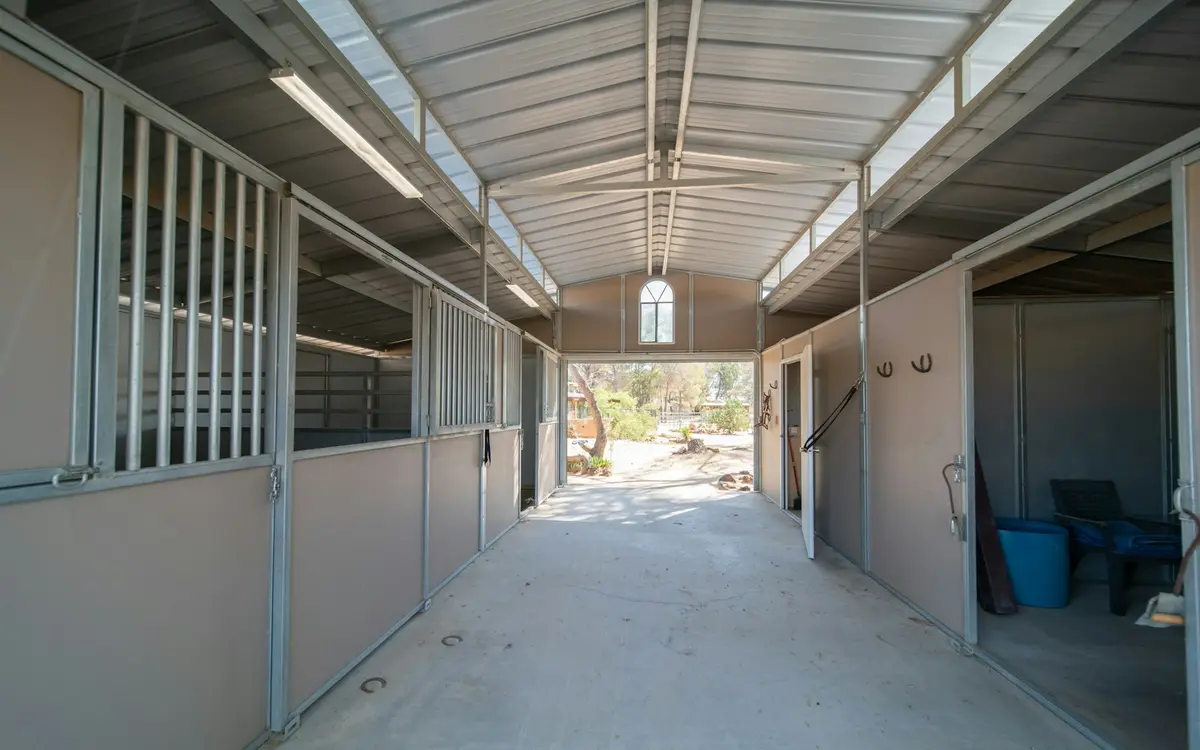
Inside the City of Lorain, the answer on horses is short. Section 505.18 of the codified ordinances prohibits keeping farm animals within city limits, its definition of farm animals names horses, and the same section keeps horses off the beach. A horse barn for a Lorain-area owner almost always means land outside the city, often in one of the county's 18 unincorporated townships.
There is plenty of horse activity out there. The 2022 Census of Agriculture tallied 1,212 horses and ponies on Lorain County farms, more than Summit and Cuyahoga counties combined, and Lorain County Metro Parks has bridle trails at several reservations plus a show arena that can be reserved at the Carlisle Equestrian Center. Township projects follow different rules than city ones. With no county building department, a private barn usually turns on Ohio's agricultural exemption, while a boarding or lesson facility that brings the public inside may need plan review. We sort out which applies before drawing stalls or an arena.
What to know before building in Lorain
Townships treat horses as agriculture
In township zoning, Ohio Revised Code 519.01 counts the care and raising of equine as agriculture, so townships generally cannot prohibit keeping horses on farm acreage. Platted subdivisions are the exception: on lots between one and five acres there, the township can control where a barn sits, how tall it is and how big it gets. We check the plat and the lot size before we sketch a barn.
Arenas open to the public need a review path
A show, clinic or lesson arena invites the public in, and Ohio applies its building codes to buildings occupied by the public, even on farms. In a township, nonresidential plans are reviewed by a certified building department with jurisdiction there, and ORC 3791.04 sends them to the state when no such department exists. That review takes time, so we put it in the arena schedule from day one.
Keep manure away from ditches
Ohio State University Extension advises storing horse manure at least 50 feet from any drainage way or watercourse and using a grass filter strip to slow runoff, and we site the manure pad with that in mind. OSU also points horse owners to their county Soil and Water Conservation District and NRCS for technical help, and notes that cost-share for storage structures may be available.
Hay belongs in its own building
Hay is one of Lorain County's major crops, so much of it goes into storage fresh from the field. Penn State Extension puts ideal baling moisture at 15 to 18 percent and notes that the first six weeks after baling are when most hay fires happen. A separate hay building set 50 to 100 feet from the stalls means a fire in the hay does not reach the horses.
Common horse barns & riding arenas projects around Lorain
- Center-aisle barn with 12x12 stalls and a tack room on township acreage
- Three-sided run-in shed with the open side turned away from north winds
- Indoor arena for a boarding or lesson facility
- Hay barn set 50 to 100 feet from the stalls
- Covered manure pad sited away from ditches and streams
Horse Barns & Riding Arenas FAQs for Lorain
Can I keep a horse in the City of Lorain?
No. Lorain's codified ordinances prohibit farm animals inside city limits, and horses are on the list. Neighboring communities such as Amherst and North Ridgeville are separate cities with their own codes, and townships generally allow horses as agriculture, so the rules depend on the exact parcel. We can help confirm them before you buy land or plan a barn.
How do I keep a horse barn from dripping condensation?
Give it more air, not less. Penn State Extension says condensation on interior surfaces means a stable is closed up too tightly. Its guidance calls for permanent eave openings of at least an inch per 10 feet of building width, a ridge opening of at least a square foot per horse, and about R-5 insulation under the roof of an unheated barn. We build those openings into the truss and trim design.
What goes under an indoor arena's footing?
A firm, compacted base comes first. University of Kentucky Extension recommends at least six inches of added base material and at least four inches of riding surface. Penn State Extension suggests starting sand footing around two inches deep, going no deeper than six, and watering it evenly to about three inches to control dust. We grade the pad before the building goes up.
About our horse barns & riding arenas
Stall barns, run-in sheds and indoor riding arenas planned around how horses live and work, with stall sizes, airflow and hay storage based on university extension guidance.
Sizes, materials and options