
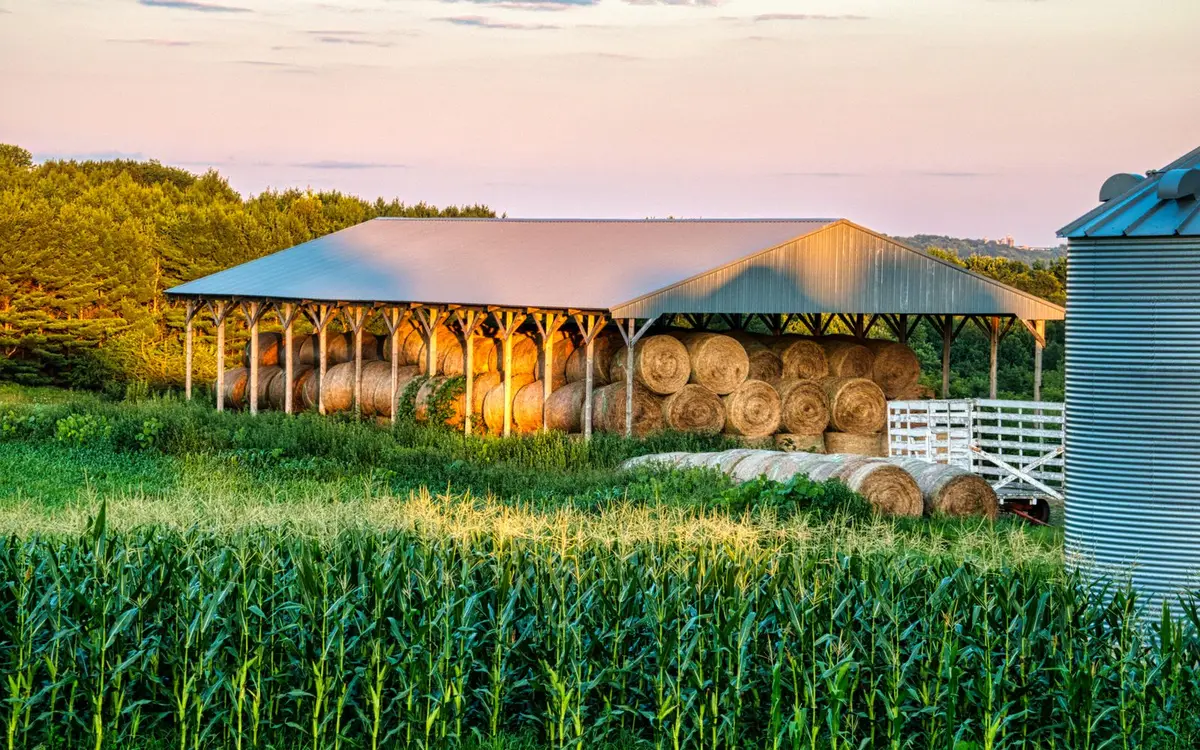
The farm side of Lorain County is bigger than people expect from a lakefront steel town. The 2022 Census of Agriculture counted 894 farms on nearly 109,000 acres, with soybeans the leading crop by a wide margin and corn, hay and wheat behind it. The county also ranked third in Ohio for nursery, greenhouse, floriculture and sod sales, which made up about half of its farm income. We expect most agricultural projects in this area to be out in the surrounding townships rather than inside the City of Lorain.
That mix shapes what farmers here need: machine sheds deep enough for planters and grain equipment, open-front hay storage, potting and shipping buildings for nursery and greenhouse growers, and barns for the county's horses. In the townships, Ohio law sharply limits how far zoning can reach into agriculture, and a qualifying farm building is outside the state building code. We help you document the farm use so that exemption is handled correctly before the first post goes in.
What to know before building in Lorain
Township zoning and the farm exemption
Under ORC 519.21, townships cannot prohibit agricultural use of land or require a zoning certificate for buildings incident to it. Under ORC 3781.061, once a township or county zoning inspector issues a certificate declaring a building is for agricultural use, the state building code sections do not apply to it. Ask your township's zoning inspector for that certificate and keep it with your property records.
Nursery buildings and retail sales
With nursery and greenhouse growers bringing in about half of the county's farm sales, plenty of farm buildings here handle plants, not grain. If customers buy in the building, the exemption holds only when at least half of the gross income from sales there comes from products grown on farms the seller owns or operates. A garden center selling mostly bought-in stock is a retail building.
Machine sheds sized for grain equipment
With soybeans and corn on more than 69,000 acres of the county in 2022, many machine sheds here have to swallow planters, sprayers, grain carts and sometimes a combine. Long trusses with no interior posts make that possible, but sidewall height and end-wall door width are set by your largest machine, so we measure your equipment first and design the building around it.
Field drives on county roads
A new drive or field entrance onto a county road falls under the Lorain County Engineer. Its permit application covers residential and field driveways and calls for a culvert pipe at least 12 inches in diameter and 24 feet long. Plan the barn's door locations and the approach together so farm equipment can swing in without cutting across the ditch.
Common agricultural buildings projects around Lorain
- Machine shed for planters, sprayers and a grain cart
- Open-front hay and straw storage barn
- Potting, shipping and supply building for a nursery or greenhouse grower
- Horse barn with stalls, tack room and a center aisle
- Farm shop with a heated repair bay
- Livestock shelter for cattle, sheep or goats
Agricultural Buildings FAQs for Lorain
Will a barn in a Lorain County township need a building permit?
Usually not, if the building serves the farm use of the land. Ohio law exempts buildings incident to agricultural use from the state building code, and the township zoning inspector can issue a certificate declaring the building agricultural. Get that certificate before construction. If the use changes later, for example to a business shop, the building may then need permits and code compliance.
My lot is in a subdivision. Can the township regulate my barn?
Sometimes. ORC 519.21 lets townships regulate agriculture on lots of one acre or less in certain platted subdivisions and lot groupings, and regulate setbacks, height and size of agricultural buildings on lots between one and five acres. On lots larger than five acres, those township controls do not apply. Your township zoning inspector can tell you which category your parcel falls in.
Does the exemption cover a house or living space in the barn?
No. The Ohio Board of Building Standards' guidance, citing a 1962 Attorney General opinion, treats a residential dwelling as not incident to agricultural use. A barn that is partly farm storage and partly living quarters or an unrelated business is treated as mixed use, and the non-farm portion falls under the building code. We design those spaces to code from the start.
About our agricultural buildings
Post-frame farm buildings for equipment, hay, grain and livestock, sized to your machinery and engineered for the snow and wind loads at your site.
Sizes, materials and options