
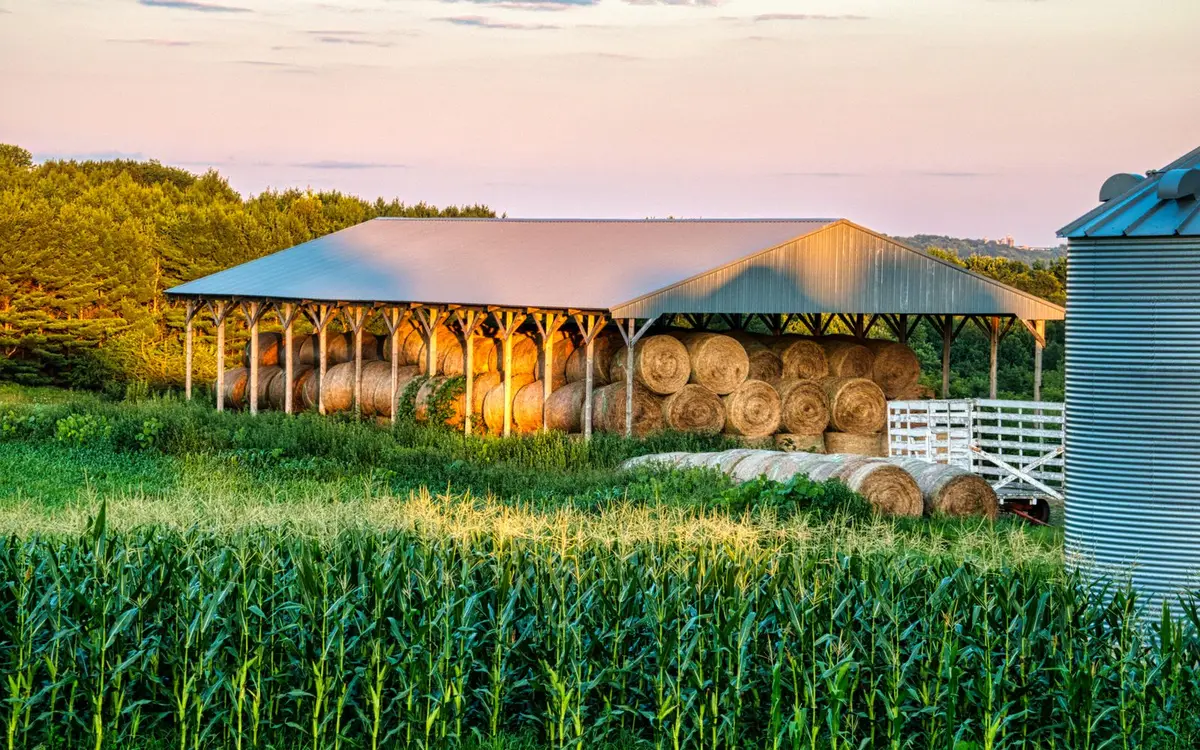
Akron is a city of about 62 square miles, and a full-size farm barn is rarely a fit inside its limits. The zoning code does list farming, agriculture, nurseries and greenhouses among the uses allowed in the U1 dwelling district, but on residentially zoned lots an accessory building is held to 15 feet at the peak and 900 square feet at most. That is enough for a modest tool, feed or potting building for an urban grower or market garden, not for a hay barn or a livestock building.
For a true farm building, the more workable sites near Akron are usually on acreage in the surrounding townships, such as Springfield, Coventry, Copley and Bath, which send building work to the same Summit County office. Ohio law limits how townships can zone agricultural buildings, so the path there looks very different from the one inside the city. We help you sort out which side of the line your land falls on before we design anything.
What to know before building in Akron
Flood plain parcels allow farming but not buildings
Some Akron land is zoned UFP, the flood plain district. Farming, gardening, nursery and other agricultural uses are allowed there, but the code states that no building may be erected for any purpose. If your field carries that zoning, plan on open-ground use and look for a building site on land in a different district.
City size and height caps
Akron's residential accessory rules apply to farm outbuildings on residentially zoned lots too. The largest single building allowed is 900 square feet, and only on lots over 8,000 square feet; smaller lots get less. No accessory building may top 15 feet at its peak, and together they can cover no more than 40 percent of the rear yard. Anything bigger means a zoning appeal.
Township acreage follows state rules
Under ORC 519.21, township zoning generally cannot prohibit agriculture or regulate buildings incident to it. In platted subdivisions and similar groups of lots, though, townships may regulate agriculture on lots of one acre or less, and the setback, height and size of farm buildings on lots of one to five acres. We confirm your lot size and subdivision status first.
The township zoning certificate route
When a county or township zoning inspector issues a zoning certificate declaring that a specific building will be used in agriculture, ORC 3781.061 takes that building out from under the state building code sections. That route runs through township or county zoning, not Akron's. Ask the township zoning office how it handles these certificates before construction starts.
Common agricultural buildings projects around Akron
- Tool and feed building for an urban farm lot, within the 900 sq ft cap
- Potting and supply building to support a greenhouse or market garden
- Hay and equipment barn on township acreage outside the city
- Horse barn on acreage in a neighboring township
- Farm stand building that mainly sells the grower's own produce
Agricultural Buildings FAQs for Akron
Is a farm barn allowed inside Akron city limits?
Farming and agriculture are listed uses in Akron's U1 dwelling district, but any accessory building on a residentially zoned lot is limited to 15 feet at the peak and, depending on lot size, 576 to 900 square feet. Flood plain (UFP) parcels allow farming but no buildings at all. Larger farm structures usually make more sense on acreage outside the city.
Which offices handle a farm building in a township near Akron?
Summit County Building Standards serves townships including Springfield, Coventry, Copley and Bath for building permits and inspections. Zoning, where a township has adopted it, goes through the township's own zoning office. If the building qualifies as agricultural under Ohio law, the building permit may not be required, but confirm that with both offices before you break ground.
If my barn is exempt, do I still need an engineered design?
An exemption removes the state building code requirement, not the weather. We still use engineered trusses and design for the snow and wind loads of the site, because a barn that racks or sags after a heavy Northeast Ohio winter costs far more to fix than to build right. An engineered design also keeps options open if you later change the building's use.
About our agricultural buildings
Post-frame farm buildings for equipment, hay, grain and livestock, sized to your machinery and engineered for the snow and wind loads at your site.
Sizes, materials and options