
Keeping a horse inside Akron is possible only by exception. Section 92.18 of the city code bars horses, ponies, cows, goats and other hoofed animals unless the Director of Neighborhood Assistance issues a permit, and a permit can only cover a lot or parcel of one acre or more. The animals must stay at least 50 feet from any building used or designed for people to live in, and the director can attach whatever conditions are needed to control odor, noise and sanitation.
Even with a permit, a barn on a residential lot is still an accessory building under the zoning code, which leaves room for a compact shed-row barn and not much more. That is why most horse projects in the Akron area end up on acreage in the surrounding townships. Summit County farms reported 520 horses and ponies in the 2022 Census of Agriculture. We start by confirming which jurisdiction your land is in, then plan the stalls, shelter or arena around its rules.
What to know before building in Akron
The hoofed-animal permit comes first
The permit starts with a written application to the Director of Neighborhood Assistance, and the city investigates how the animals will be kept. The code also allows a public hearing, after which more limits can be added. Ordering materials before that approval is a gamble, so we hold final design until you have the permit or at least a clear answer from the city.
Four stalls under 900 square feet
On lots over 8,000 square feet, Akron caps a single accessory building at 900 square feet and 15 feet at the peak. Two 12-by-12 stalls on each side of a 12-foot aisle make a 36-by-24-foot barn of 864 square feet, which fits. A hay loft and a tall ceiling usually do not, so hay is stored elsewhere and the trusses stay open for air.
Townships count horses as agriculture
For township zoning, Ohio Revised Code 519.01 defines agriculture to include the care and raising of equine, and 519.21 generally keeps townships from prohibiting it. Subdivisions are the main exception: on platted lots of one to five acres, a township may regulate barn setbacks, height and size. Springfield, Coventry, Copley and Bath townships rely on Summit County for building review.
Manure adds up fast on one acre
Penn State Extension estimates a 1,000-pound horse produces about 51 pounds of manure a day, and with soiled bedding each stall yields 60 to 70 pounds of waste. Six months of cold-weather storage for one stalled horse takes roughly 432 cubic feet. On a one-acre city lot with the 50-foot rule around homes, where the pile goes deserves as much thought as where the barn goes.
Common horse barns & riding arenas projects around Akron
- Shed-row barn under 900 sq ft on a permitted one-acre city lot
- Center-aisle stall barn with tack and feed rooms on township acreage
- Run-in shed for a pasture outside the city
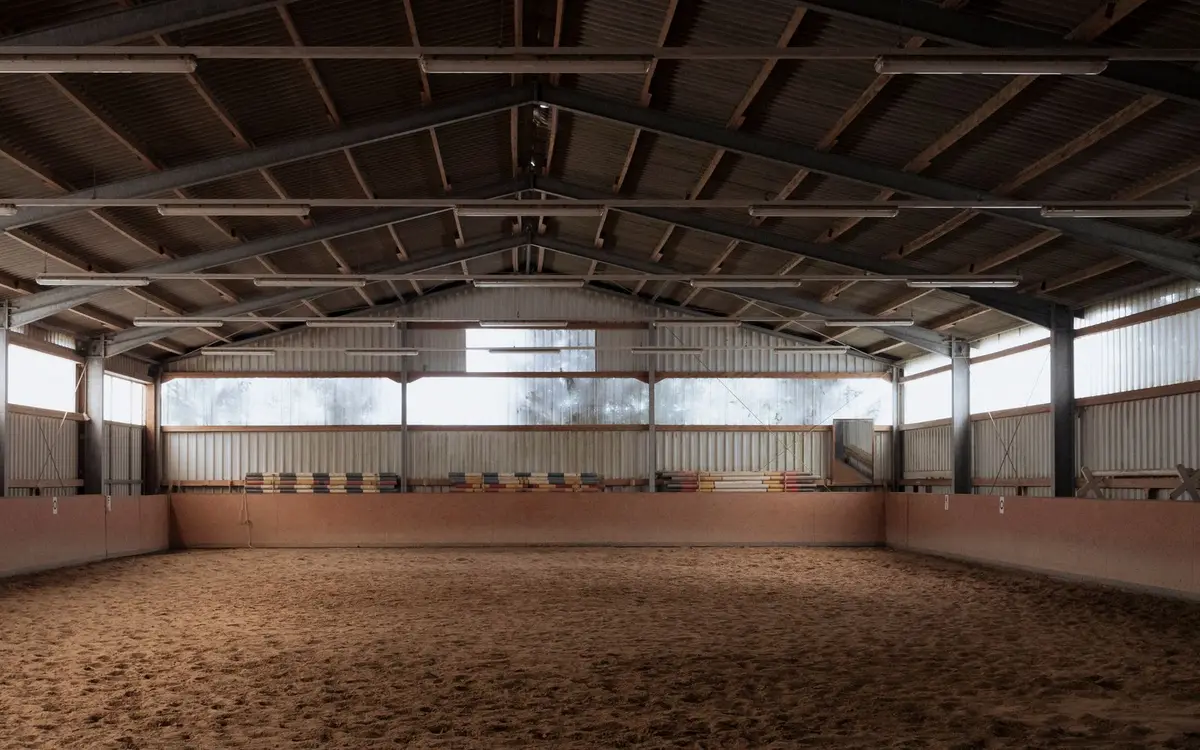
- Indoor riding arena on a larger township parcel
- Covered manure bin sized for winter storage
Horse Barns & Riding Arenas FAQs for Akron
Is a horse barn in a township near Akron exempt from permits?
Often, if it serves the agricultural use of the land. The Ohio Board of Building Standards' guidance counts horses as livestock, and a township zoning certificate declaring the barn agricultural puts it outside the state building code. Living quarters, a business shop or regular public use can change that, so confirm with Summit County Building Standards and the township zoning office before building.
How wide can an indoor arena be?
University of Kentucky Extension puts the minimum for riding at 50 to 60 feet wide and 100 feet long, with group riding and jumping calling for more. It also notes that arenas up to about 60 feet wide are usually wood framed, while those over 80 feet tend to use steel frames. We have the trusses engineered for your span and the site's snow load.
Can I use a run-in shed instead of a full barn?
For horses that live outdoors, often yes. University of Minnesota Extension suggests 72 to 144 square feet per average horse in a three-sided shelter placed to block the wind, and more if horses do not get along. On a permitted city lot, the 50-foot separation from homes and the accessory-building limits still apply, and they often decide where the shed can go.
About our horse barns & riding arenas
Stall barns, run-in sheds and indoor riding arenas planned around how horses live and work, with stall sizes, airflow and hay storage based on university extension guidance.
Sizes, materials and options