
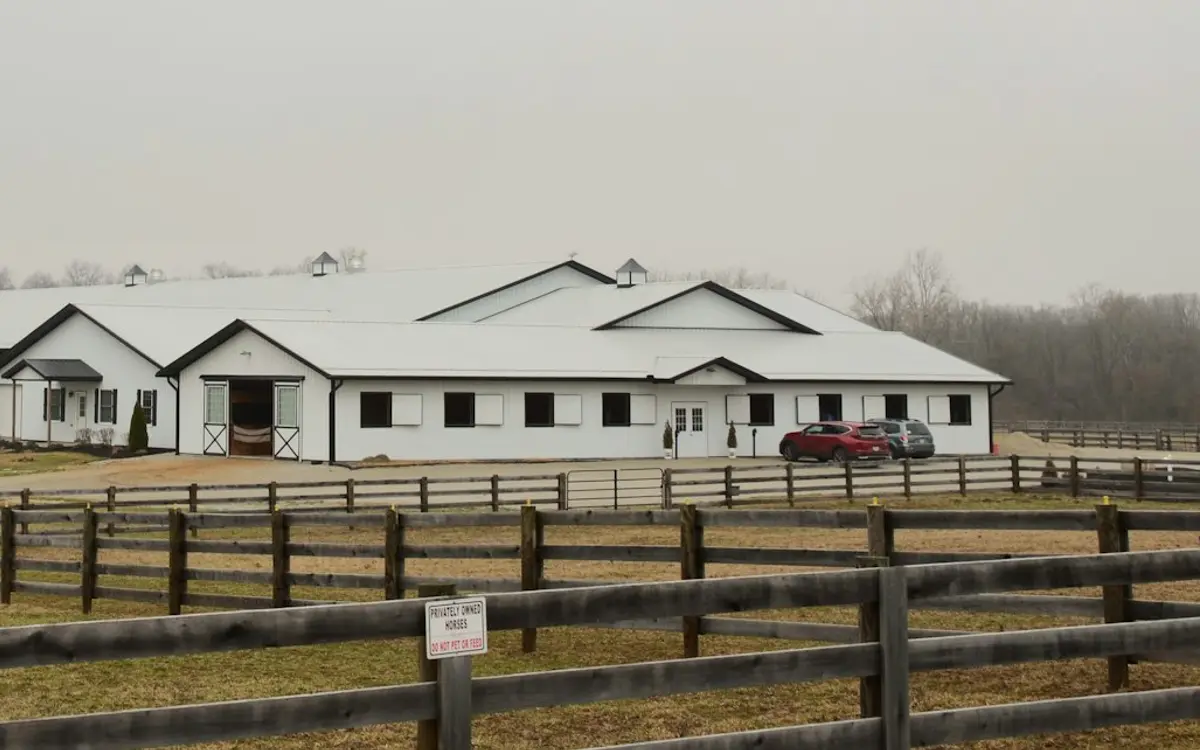
We want to be direct about horses in Stow. The city's 2026 zoning code does not list horse keeping in any residential district. Agriculture, which the code defines to include raising livestock, appears as a permitted principal use in just one district, O Conservation, and anything the code leaves unlisted is barred unless the Planning Director rules that it belongs to a listed use. For most Stow homeowners, a backyard horse barn is not an option.
That changes where a barn goes rather than whether a Stow-area family can have one. Brimfield Township borders Stow to the southeast, and State law leaves Ohio townships little power to zone farming except inside platted subdivisions. If you own O-district land in Stow or acreage in a nearby township, we can help plan stalls, hay storage, a run-in shed or an arena, and we start by confirming what the local zoning allows.
What to know before building in Stow
Confirm the parcel's district
O Conservation zoning is the only district where Stow lists agriculture as a permitted principal use. Lots there must be at least three acres, buildings may cover no more than a tenth of the lot, and the district's purpose is conserving valleys, woods and flood-prone ground. Before planning a barn on O-zoned land, we ask Planning & Development how a horse operation would be classified.
Township land works differently
Townships play by different rules. ORC 519.21 keeps township zoning from banning farming or controlling farm buildings in most cases; the main exceptions are platted subdivisions, where a township can restrict agriculture on lots up to an acre and control farm-building size, height and setbacks on lots between one and five acres. Under ORC 3781.061, a township certificate declaring a barn agricultural also takes it outside the state building code sections.
Arena spans under snow
An indoor arena is one of the widest clear spans in post-frame construction, and in the secondary snowbelt its roof has to carry drifting and sliding snow without interior posts. Truss spacing, post size and wall bracing are engineered together. Stall barns and run-in sheds are far simpler, so a phased plan can start with stalls and add an arena later.
Manure handling
The state's farm pollution abatement rules include horses and expect best management practices that keep manure and sediment out of state waters. Soil and water conservation districts can carry out that program under agreements with the Ohio Department of Agriculture. We place manure storage on high ground away from ditches and route roof water so it does not run through paddocks.
Common horse barns & riding arenas projects around Stow
- Stall barn with tack and feed rooms on township acreage near Stow
- Run-in shed for a pasture
- Hay barn sized for a winter's supply
- Private indoor arena with engineered clear-span trusses
- Barn on O-district land after a zoning classification check
Horse Barns & Riding Arenas FAQs for Stow
Are horses allowed on residential lots in Stow?
On a typical residential lot, no. Stow's residential zones permit only household-scale agriculture, namely gardens, hives and coops, and horses are not on that list. The single district where agriculture is a permitted principal use is O Conservation. If you own O-zoned land or have a question about a specific parcel, Planning & Development can tell you how the code applies.
Does a private horse barn need a building permit in Ohio?
Possibly not. Under ORC 3781.06, a building that supports the agricultural use of its land sits outside the state building codes, and state guidance treats horses as livestock. Zoning still applies, and an arena used for paid lessons or events may be treated as a commercial building. Ask the building department that covers the parcel before you start.
How many horses are in Summit County?
The USDA counted 520 horses and ponies on Summit County farms as of December 31, 2022. County farms sold about $95,000 worth of equines (horses, ponies, mules, burros and donkeys) that year. Hay and haylage was the county's largest crop by acreage at 2,448 acres, which is worth knowing when you decide how much hay storage to build.
About our horse barns & riding arenas
Stall barns, run-in sheds and indoor riding arenas planned around how horses live and work, with stall sizes, airflow and hay storage based on university extension guidance.
Sizes, materials and options