
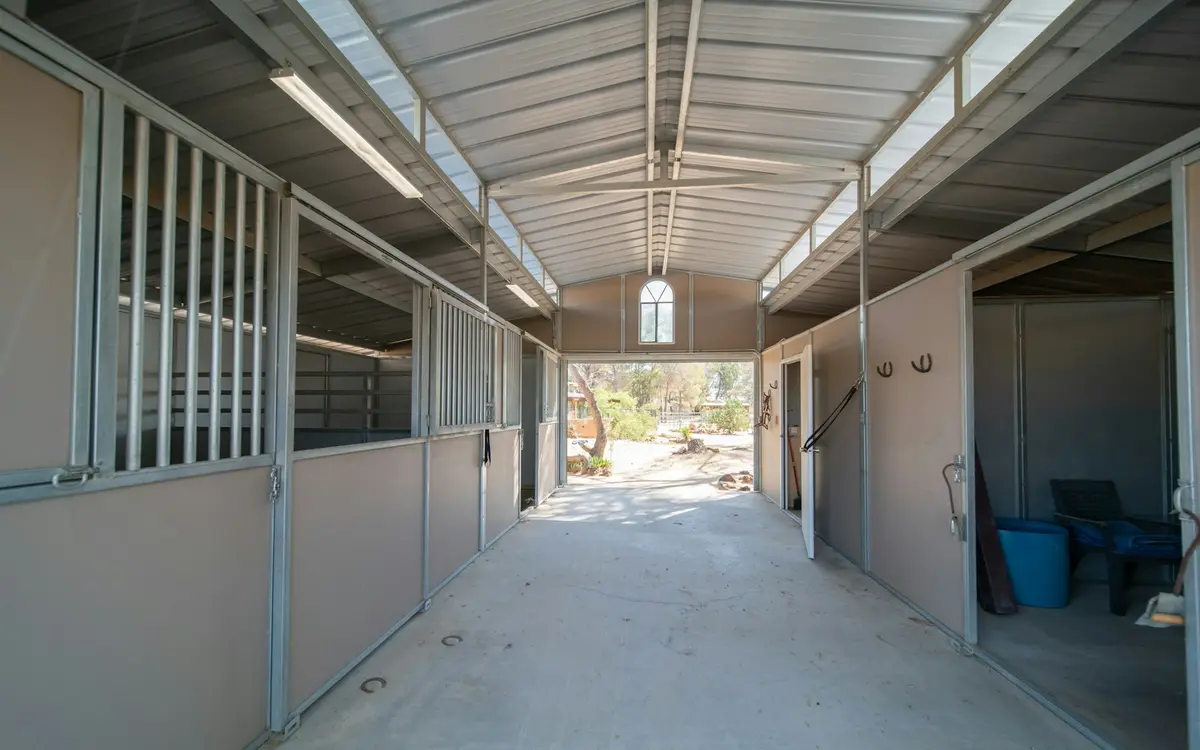
We will be direct: a horse barn is not a realistic project on a residential lot in the City of Cleveland. The farm-animal rules the city adopted in 2009 make room for chickens, ducks, rabbits and bees, and for goats, pigs and sheep on larger parcels with bigger setbacks. Horses appeared only in a proposed Urban Agriculture Overlay District for specially designated areas, which a city zoning summary listed as pending before City Council, and we have not found a record that it was adopted.
Horses are still part of life in Cuyahoga County. The 2022 Census of Agriculture counted 225 horses and ponies on the county's farms, and Cleveland Metroparks maintains about 82 miles of bridle trails. For a city resident, owning a horse usually means boarding it or buying acreage in an outer suburb or a nearby county, where local zoning sets the rules. We design stall barns, run-in sheds and arenas for those properties, including boarding barns that serve riders from the city.
What to know before building in Cleveland
Every suburb sets its own horse rules
Cuyahoga County's suburbs are separate cities and villages, and each one's zoning decides whether horses are allowed, how many a parcel can hold and how far a stable must sit from neighbors. There is no countywide answer. We read the code for your specific parcel and use the state's building jurisdiction map to confirm which department reviews the barn.
Public use changes the code question
Ohio applies its building codes to buildings used for assembly or occupancy by the public, and the farm exemption does not override that. An Ohio appeals court upheld a stop-work order after a barn was converted to host events, and in another case a court found a distinct fire hazard where workers lived in an equestrian center's barn. Boarding and lesson barns should get a written code determination.
Dust and water in a closed-up arena
In winter an indoor arena gets shut tight, and footing dust hangs in the air horses and riders breathe. Watering keeps it down, so we plan a supply line buried below frost (the city's design criteria use 42 inches for footings) or a frost-free hydrant inside. Roof-peak and sidewall openings carry dust out; University of Kentucky Extension notes a fan only adds ventilation when set in a wall or roofline.
No fields to spread on
A suburban horse property often has no cropland for spreading manure, so storage and hauling need a plan. Penn State Extension recommends covering stored manure to reduce leachate and diverting roof runoff away from the pile, and Ohio rules make animal keepers responsible for keeping manure-contaminated runoff out of streams. We place a covered bin where a hauler's truck can reach it.
Common horse barns & riding arenas projects around Cleveland
- Boarding barn with a wash stall, tack lockers and an owners' lounge
- Four- to six-stall private barn on suburban acreage
- Run-in shed for pastured horses
- Indoor arena for riding through lake-effect winters
- Hay storage building set apart from the stable
Horse Barns & Riding Arenas FAQs for Cleveland
Can I keep a horse at my house in Cleveland?
Not under any rule we could find. The city's farm-animal ordinance addresses chickens, ducks, rabbits, bees, goats, pigs and sheep, and larger animals such as horses were tied to a proposed overlay district limited to areas City Council would designate. The City Planning Commission can tell you its current status. In practice, Cleveland residents board horses or buy land outside the city.
What does a boarding barn need that a private barn does not?
More people coming and going means more attention to fire safety and exits. Penn State Extension suggests stalls with two ways out where possible, exits that stay clear, fire-resistant barriers dividing long barns into sections of no more than 150 feet, an extinguisher every 50 feet and a 12-foot lane fire trucks can use. If owners and students gather inside, expect building code review too.
How tall should an indoor arena be?
University of Kentucky Extension sets 16 feet as the minimum clearance to the lowest truss or anything hanging from it, and the Horse Facilities Handbook table it cites lists 14 feet for basic riding and 16 for jumping. Lights and fans hang below the trusses, so we set the eave height from the bottom of those fixtures rather than the truss itself.
About our horse barns & riding arenas
Stall barns, run-in sheds and indoor riding arenas planned around how horses live and work, with stall sizes, airflow and hay storage based on university extension guidance.
Sizes, materials and options