
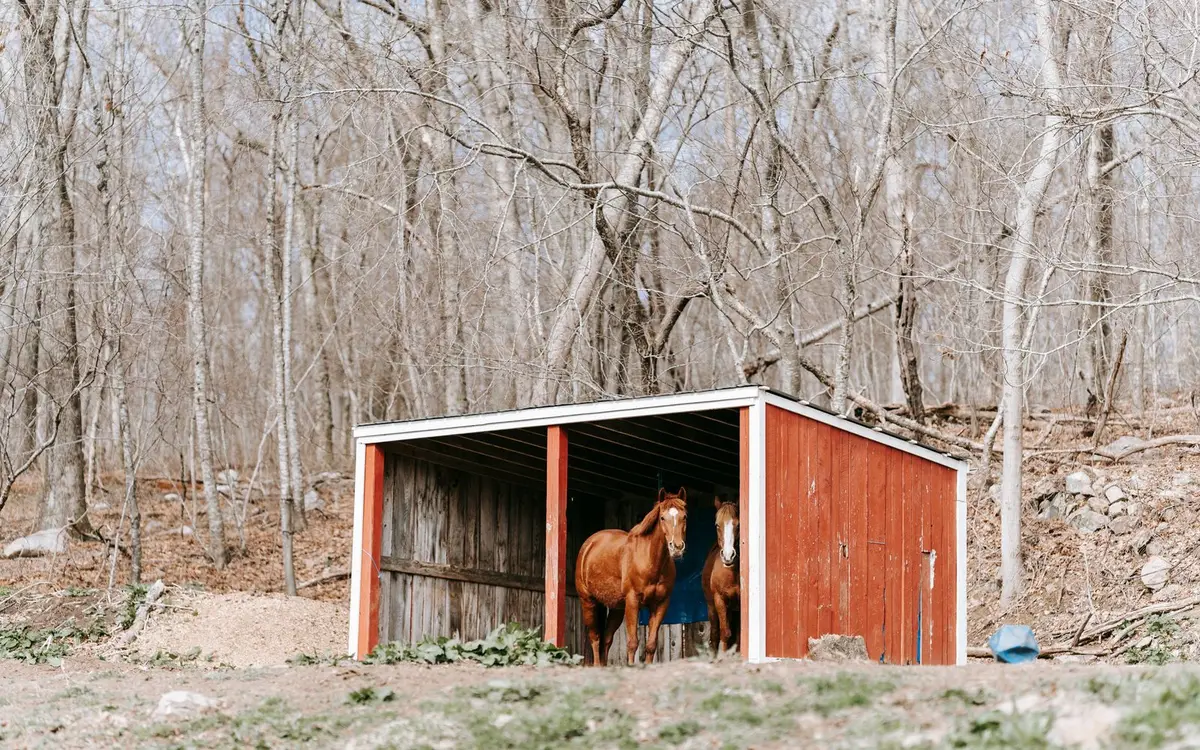
The City of Erie is not a place to keep a horse. Section 729.15 of the city code says no one may board, breed, house, keep or maintain any animal usually kept as a farm animal or livestock in the city. Yet 222 Erie County farms reported 1,310 horses and ponies to USDA's 2022 census, and they are kept outside the city. Millcreek, for example, allows noncommercial livestock only in its Conservation Residential (CR) district, on at least two acres, at one animal per acre up to five.
That shapes what we build here: small private barns for a few horses, run-in sheds for pastured herds, hay storage, and indoor arenas for riders who don't want to stop for the winter. The arena is the demanding one. Between the mornings of December 25 and 26, 2017, 32.6 inches of snow fell at Erie, and an arena's trusses span the whole riding area without interior posts to share the load. We design that roof around Erie snow first and fit the rest of the building to it.
What to know before building in Erie
No permit review doesn't mean no engineering
Because the UCC does not apply to agricultural buildings, no code official will check the truss design on an exempt arena or horse barn. That puts the engineering on us and on you. We order trusses engineered for at least the 40 psf ground snow load the City of Erie publishes, or your township's figure if it is higher, and we check drift loads on any lower stall wing built against the arena wall.
Public use can end the exemption
Pennsylvania's agricultural building definition covers structures that house livestock, but it stops short of buildings open to the public. A private barn and arena for your own horses fit. An arena that hosts paying lessons, clinics, shows or spectators may need a UCC permit, so we ask your municipality's code official, in writing, before design starts.
A manure plan, even for one horse
Penn State Extension says every Pennsylvania operation, even one with one or two backyard horses, needs a written manure management plan kept on the farm and available on request. Farms with at least 8 animal equivalent units and more than 2 per acre fall under Act 38 and need a certified nutrient management plan, and recreational horses count. Manure stacked near the barn must sit on an improved surface or be covered.
Millcreek's setbacks shape the layout
Millcreek requires structures housing noncommercial livestock to sit at least 50 feet from property lines, keeps them out of the front yard on lots under five acres, and sets pasture fencing back 10 feet from streets and lot lines. A riding stable is a separate use there, needing 10 acres and a 200-foot setback for boarding buildings. Other townships write their own rules, so we check yours.
Common horse barns & riding arenas projects around Erie
- Private barns for up to five horses on Millcreek CR lots
- Indoor riding arenas with engineered clear-span trusses
- Run-in sheds for horses on pasture
- Hay storage barns with room to unload a wagon inside
- Insulated tack and feed rooms inside a stall barn
- Roofed manure storage on a concrete pad
Horse Barns & Riding Arenas FAQs for Erie
Can I keep a horse inside the City of Erie?
No. The city's ban on keeping farm animals and livestock anywhere within Erie covers horses, so a stall barn on a city lot isn't an option. Horse owners in the area keep their animals on township land or board them. If you're shopping for acreage, check the township's zoning district before you buy, because the rules for horses vary from one township to the next.
Does a horse barn in an Erie County township need a UCC permit?
Not a UCC building permit, if the barn fits Pennsylvania's agricultural building definition by housing livestock and storing hay, feed or equipment. Zoning is separate and still applies: Fairview Township, for one, wants a zoning permit for every roofed structure, and that includes a run-in shed. Call your township zoning office with the parcel number before we draw the site plan, and ask whether it wants the exemption documented.
Why does an arena roof in Erie need so much attention?
Width and snow. A riding arena's trusses usually clear-span the whole ring, so each one carries a long strip of roof with no posts underneath. Lake-effect storms pile snow up quickly; the National Weather Service's revised records put Erie's December 2017 total at 93.8 inches, a monthly record. Wind also drifts snow into uneven loads. We engineer the roof for those conditions instead of using a stock truss.
About our horse barns & riding arenas
Stall barns, run-in sheds and indoor riding arenas planned around how horses live and work, with stall sizes, airflow and hay storage based on university extension guidance.
Sizes, materials and options