
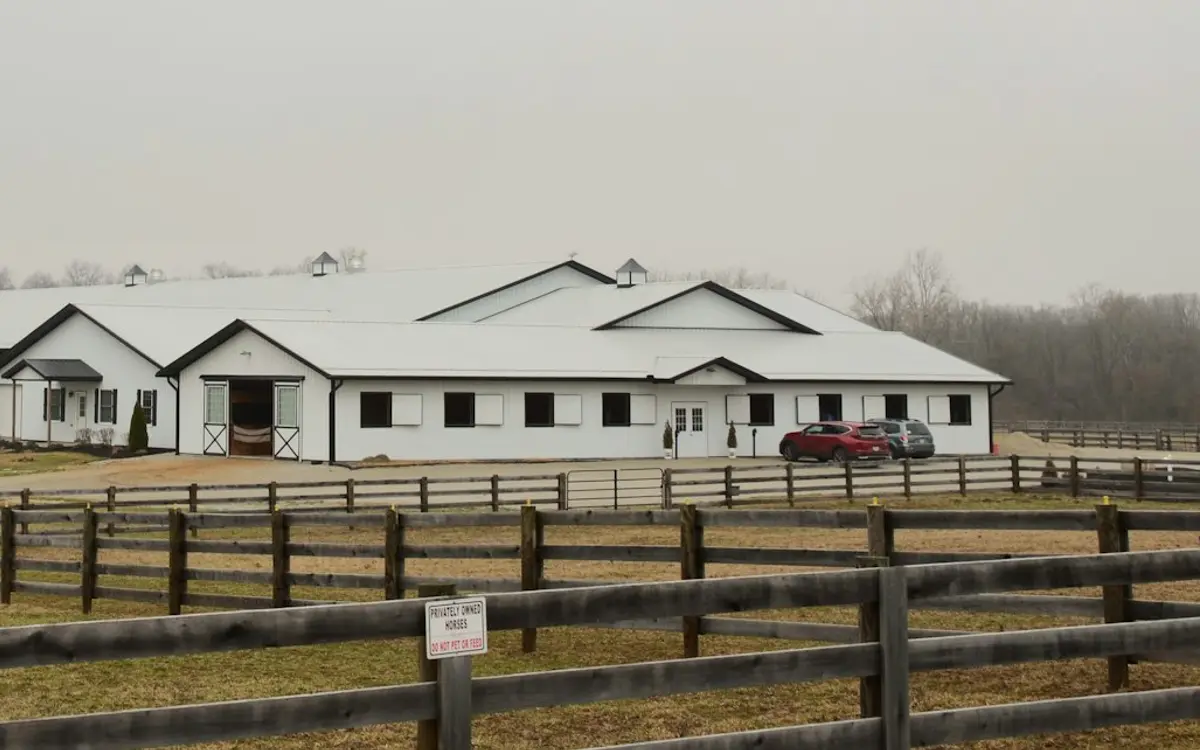
Tallmadge is one of the few cities near us whose zoning code spells out how horses can be kept. A private stable serving a home is a conditional use in the R1 district, and the number of horses is tied to land: one acre for the first horse, and at least five acres before a second one is allowed. Public stables, a category the code says includes riding academies and hunt clubs, need five or more contiguous acres and carry their own rules on setbacks, parking and lighting.
Summit County had 520 horses and ponies on its farms at the end of 2022, according to the USDA Census of Agriculture. Since this is our home base, a Tallmadge horse project starts with a walk of the parcel and a close read of Section 1104.07. Whether you want two stalls and a tack room behind the house or a lesson barn with an indoor arena, the stable category you fall under decides where the building sits and what the Planning and Zoning Commission will expect.
What to know before building in Tallmadge
Lesson and club barns are public stables
Riding academies and hunt clubs fall under the public stable standards. The stable must sit at least 300 feet from homes on abutting lots, paddocks and instruction areas stay 30 feet inside the site perimeter, parking goes at least 100 feet in from it, and access must come through the parcel's own frontage on a public road. We plot all four distances before sizing the barn.
Arena lights go off at 11 p.m.
For public stables, the code requires floodlights or other lighting used for night riding to be shielded or aimed away from homes and abutting properties and turned off nightly at 11 p.m. An indoor arena keeps most of that light inside. We lay out interior fixtures for even coverage and keep any exterior lights low and shielded so evening rides do not turn into neighbor complaints.
Plan the manure bin with the barn
Public stables here must keep manure in tightly covered boxes that are regularly sprayed or limed to control flies, and private stables cannot store it within 100 feet of a property line. State rules add a broader duty: Ohio Administrative Code 901:13-1-04 requires anyone responsible for an animal feeding operation to keep manure-contaminated runoff out of state waters. A covered bin on a concrete pad addresses both.
Who rides in the arena matters
Ohio's building code exemption covers barns that serve the farm use of the land, and state building officials list horses as livestock in their exemption guidance. A barn for your own horses on farmed acreage is a strong candidate. An arena used for lessons, clinics or shows with spectators is a different question, because state law applies the codes to buildings occupied by the public. Summit County Building Standards makes that call.
Common horse barns & riding arenas projects around Tallmadge
- Two-stall private barn with a tack room on five-plus acres in the R1 district
- Indoor riding arena for a riding academy on five or more contiguous acres
- Run-in shed for a fenced pasture in the rear or side yard
- Separate hay and bedding building set away from the stalls
- Covered manure bin on a concrete pad
Horse Barns & Riding Arenas FAQs for Tallmadge
How much land do I need to keep a horse in Tallmadge?
A private stable needs an acre for a single horse, and a second horse raises the minimum to five acres, owned or leased by the permit holder. Because a stable is a conditional use, the commission takes public comment and must find the stable compatible with the neighborhood before approving it. We can prepare the site plan and drawings for that hearing.
Can I keep hay in a loft over the stalls?
You can, but Penn State Extension recommends keeping hay and bedding in their own building, set 50 to 100 feet away, both to cut dust in the horses' air and to keep a fire from spreading. If a loft is the only practical option, we add extra roof venting over the hay area and keep wiring in conduit. Either way, check new hay for heat in the weeks after baling.
Will an indoor arena fit on a five-acre parcel?
The building itself usually will. A 60-by-120-foot arena covers 7,200 square feet, about a sixth of an acre. Setbacks are what use up the land: a public stable must sit 300 feet from homes on neighboring lots, and a private stable needs 50 feet to each lot line and 100 feet to any house. We test the layout on your survey and confirm with zoning staff how those distances apply to an arena.
About our horse barns & riding arenas
Stall barns, run-in sheds and indoor riding arenas planned around how horses live and work, with stall sizes, airflow and hay storage based on university extension guidance.
Sizes, materials and options