
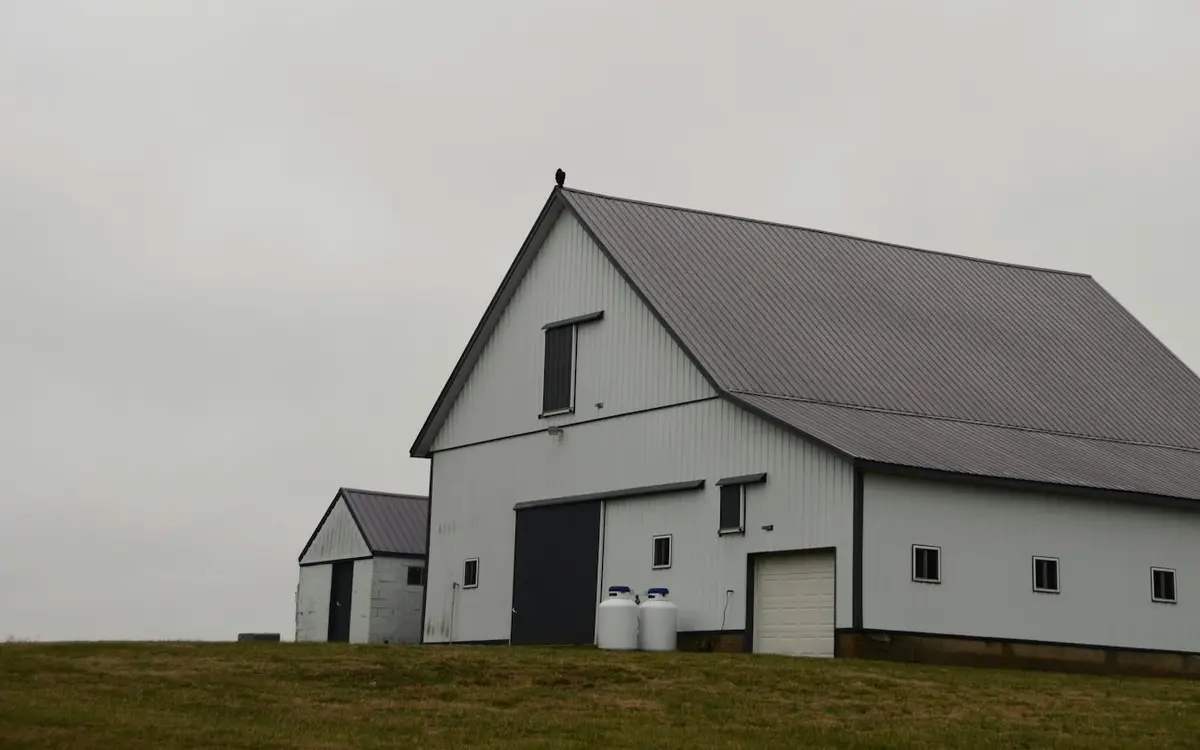
Farming in Cuyahoga County looks nothing like the rest of Ohio. The 2022 Census of Agriculture counted 104 farms on about 1,564 acres, an average of 15 acres each, and nursery, greenhouse and floriculture sales made up nearly all of the county's farm income. So when someone in the Cleveland area asks us about an agricultural building, it is usually a horse barn, a support building for a nursery or greenhouse, hay and small-tractor storage for a few acres, or a tool building for an urban farm.
Inside the city, Cleveland's zoning has allowed agriculture as a principal use on vacant residential lots since 2010, but accessory buildings in residence districts are held to 15 feet in height and pushed to the rear of the lot. That rules out a typical clear-span barn on most city parcels. Full-size post frame farm buildings make sense on larger parcels at the edges of the county and in the more agricultural counties next door, and we can help you sort out which side of that line your land is on.
What to know before building in Cleveland
Whether the ag exemption applies
Ohio Revised Code 3781.06 keeps buildings that are incident to the agricultural use of the land outside the state building code, as long as they are not used in retail trade. A house never counts as an agricultural building. On a small urban parcel the question of whether your use qualifies is not always obvious, so get the answer from Building and Housing in writing before you skip a permit.
Animals and lot size in the city
Cleveland's farm-animal rules allow chickens, ducks or rabbits at about one per 800 square feet of lot area and require much more land for goats, pigs or sheep, with licensing through the city's health department. A coop or small animal shed fits those rules. A horse barn is another matter. The county still had 225 horses and ponies on farms in 2022, and animals that size need acreage, not a city lot.
East-side snow on wide roofs
East-side properties sit in the county's heaviest lake-effect snow zone. Wide barn roofs collect drifts where they step down to a lean-to or meet a taller wall, and a loft full of hay adds weight the same framing has to carry. We order trusses engineered for the site's snow load rather than a stock design.
Moisture in nursery and potting buildings
Greenhouse and nursery work brings water, wet soil and warm plants into the building. Under a bare steel roof that turns into condensation dripping onto stock and tools. For potting, holding or packing buildings we plan ventilation and a condensation control layer under the roof steel from the start, and we keep doors and floor drainage where carts and wet pallets actually move.
Common agricultural buildings projects around Cleveland
- Horse barn with stalls, tack room and hay loft on suburban acreage
- Potting, packing and supply building for a nursery or greenhouse grower
- Hay and compact-tractor storage for a small hobby farm
- Tool and harvest-prep building for an urban farm on a larger parcel
- Run-in shed for pastured animals
Agricultural Buildings FAQs for Cleveland
Is a farm building near Cleveland exempt from permits?
Possibly not a building permit, but plan on talking to the local office first. Ohio law keeps buildings that serve the agricultural use of the land outside the state building code. The Ohio Board of Building Standards walks through the same questions: is the land used for agriculture, does the building serve that use, and is it used for retail. Zoning still applies in the city and its suburbs, so get the decision in writing.
Can I sell produce or plants out of the building?
You can, within limits. Under ORC 3781.06 a farm building is not treated as being used in retail trade if at least half of the gross income from sales in it comes from products grown or raised on farms the seller owns or operates. Sell mostly products from elsewhere and it is a retail building that needs a permit. Cleveland treats farm stands in residential districts as a conditional use that needs Board of Zoning Appeals approval.
Is a full-size pole barn realistic inside Cleveland city limits?
Rarely on a house lot. Residence-district accessory buildings are capped at 15 feet tall, have to sit on the rear half of the lot, and cannot cover more than 40 percent of the required rear yard. Larger parcels or land zoned for industry open up more options, and outer suburbs and neighboring counties usually leave far more room. Send us your address and we will tell you honestly what fits.
About our agricultural buildings
Post-frame farm buildings for equipment, hay, grain and livestock, sized to your machinery and engineered for the snow and wind loads at your site.
Sizes, materials and options