
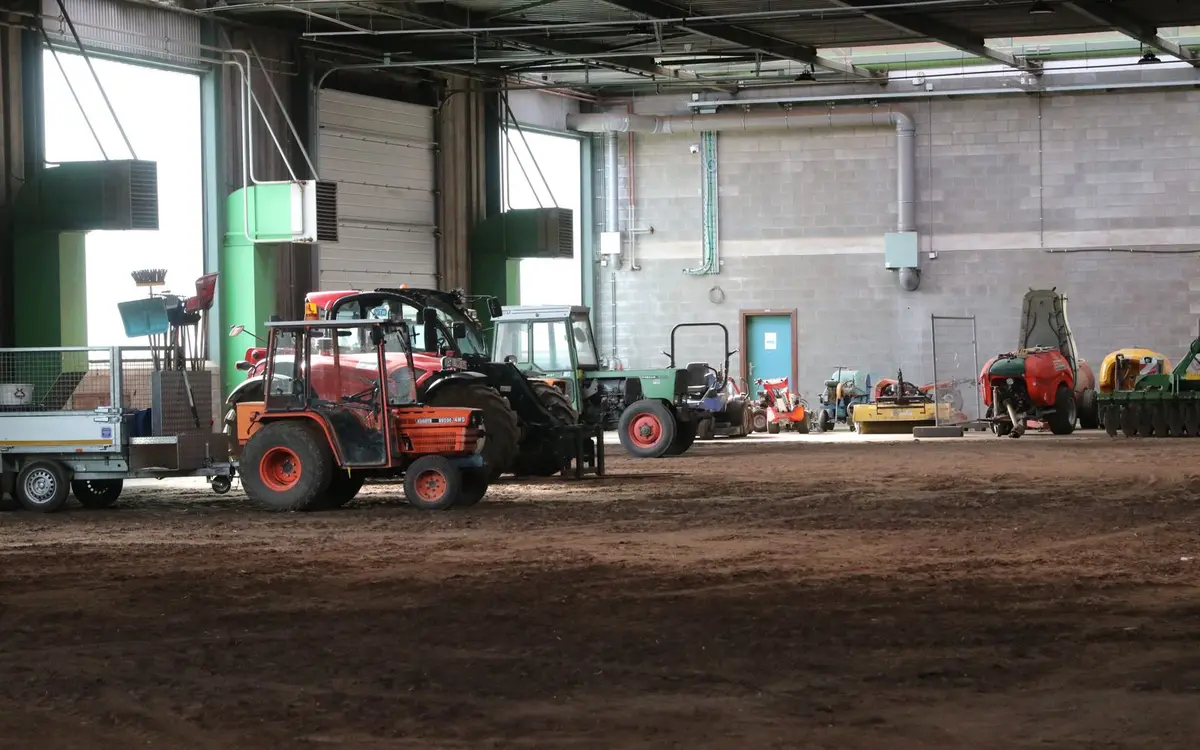
Hudson's code pushes equipment indoors. Outdoor storage of construction, landscape and similar equipment is not permitted in any residential district, and trucks with a curb weight of 6,000 pounds or more may not be parked overnight outside, except in Districts 6 and 8, unless they are in an enclosed structure. For a landscaper, excavator or snow removal contractor, a building is often the only lawful way to keep machines on site.
Where that building goes depends on the operation. District 8 allows warehousing and storage by right, with screened outdoor storage of goods and equipment in side and rear yards. A residential property can keep the owner's own equipment inside an accessory building within the 1,200-square-foot and 18-foot limits. Home businesses face a stricter rule, covered below. We size doors, spans and the slab around your largest machine and place the building to meet the setback that applies.
What to know before building in Hudson
The 50-foot rule for home businesses
A Hudson home occupation can use an accessory building, but landscaping and lawn-maintenance equipment, supplies and trailers must be kept inside an enclosed building at least 50 feet from any residentially zoned lot line. The business may have only one nonresident employee, and vehicle or equipment repair is barred as a home occupation. On a narrow lot, that distance alone can rule out the plan.
Yards next to neighbors
On District 8 land, buildings must sit 100 feet from adjoining residentially zoned or used property, and parked or stored vehicles and materials 50 feet. Outdoor storage needs a Bufferyard B screen facing the street and Bufferyard A along side lot lines. When a site backs up to homes, those distances shape the yard layout as much as the building.
Doors sized for the trailer
Most equipment arrives on a trailer behind a truck. We size door width and the approach for the full combination you back in, set eave height to clear the tallest load, and use clear-span trusses engineered for Summit County snow so no posts stand in the drive lanes. Heavier machines get a thicker, reinforced slab and apron.
Common equipment storage facilities projects around Hudson
- Enclosed storage for a landscaping company's trucks, trailers and mowers
- Contractor equipment building on District 8 land with a screened yard
- Homeowner's tractor and implement building within the accessory limits
- Snowplow truck garage that keeps a heavy truck off the driveway overnight
- Heated fleet maintenance bay (conditional use approval in District 8)
Equipment Storage Facilities FAQs for Hudson
Can I park my plow truck in the driveway?
Probably not overnight if it is licensed as a truck and weighs 6,000 pounds or more at curb weight. Hudson's code bars parking or storing those trucks in every district except 6 and 8 unless they are in an enclosed structure, and it bars daytime truck parking except for deliveries. A garage that fits the truck with its plow attached solves the problem.
Is equipment storage a permitted use in District 8?
Warehousing, distribution and storage is permitted by right there, and the district allows screened outdoor storage of goods, non-hazardous materials and equipment in side and rear yards. Recreational vehicle, boat or truck storage as a business, and operations centered on parking and maintaining vehicles, are conditional uses, so we confirm your classification before design.
What about storing my own tractor and mower at home?
That is ordinary accessory storage. A residential outbuilding can have a footprint as large as 1,200 square feet and a height of 18 feet, and up to three such buildings are allowed on parcels up to 2.5 acres, four above that. The ban on outdoor storage covers construction and landscape equipment, so keeping your machines inside also keeps the property in compliance.
About our equipment storage facilities
Clear-span storage buildings for trucks, tractors and heavy equipment, with doors and sidewalls sized to the machines you park inside.
Sizes, materials and options