
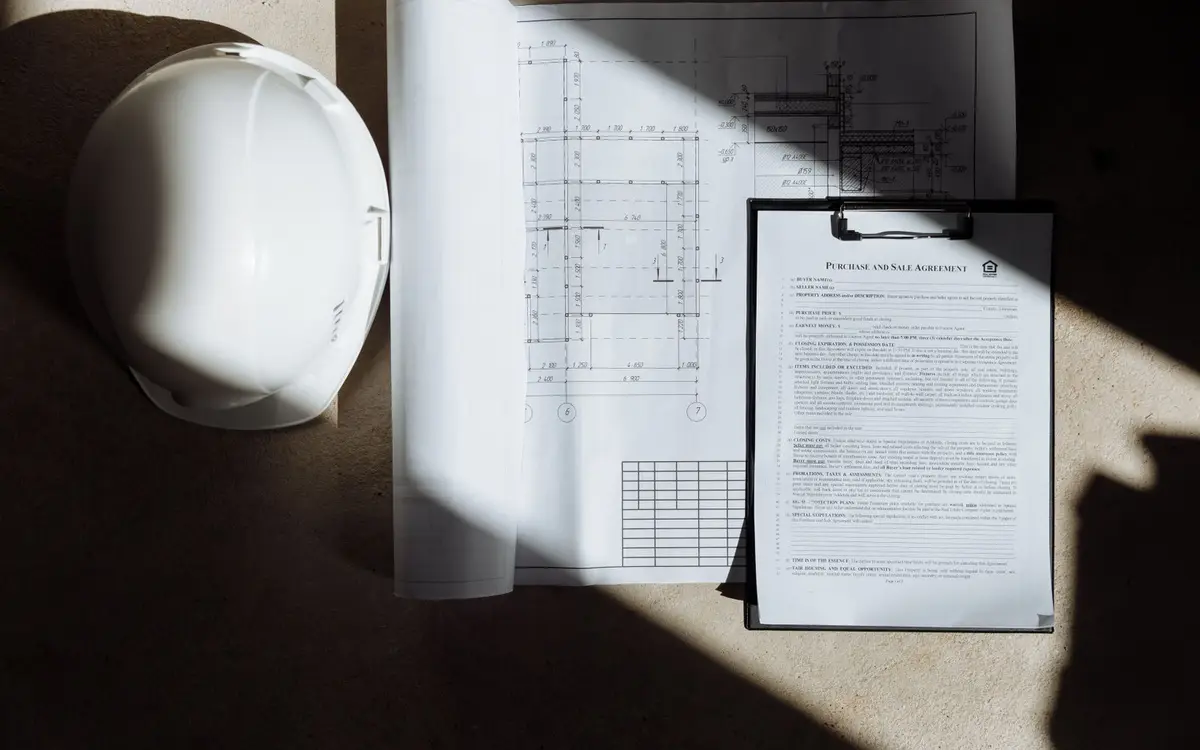
Most pole barn projects need two separate approvals, and owners often learn about the second one late. Zoning decides whether the building is allowed on your lot at all, and how big, how tall and how close to the property lines it can be. The building code decides how it has to be built: snow and wind loads, footings, framing and inspections. In Ohio and Pennsylvania those two jobs are frequently handled by different offices, and in both states farm buildings get a partial pass from the building code. This guide walks through how the system works on each side of the state line and what to pin down before anyone starts drawing.
Zoning and building permits are two different approvals
Zoning is local. A city, village, township or county writes its own rules about land use, building size, height, setbacks and how many accessory buildings a lot can hold. The building code is statewide, but it is enforced by whichever certified department covers your address. The two offices often sit in different buildings and answer to different governments.
Around our area, the split shows up everywhere. In Tallmadge, the city's Planning and Zoning Department issues the zoning certificate and the Summit County Department of Building Standards issues the building permit. Canton's building department will not issue a building permit until the city's zoning permit is approved, and the City of Erie treats zoning approval as the first step for every building permit. The general rule is to clear zoning first, because a building that zoning will not allow does not need a structural review.
Size thresholds differ between the two systems as well. Portage County's building department notes that residential accessory structures of 200 square feet or less are exempt from Residential Code of Ohio plan review and permits, but a zoning approval is still required. A small shed can skip one office and still need the other.
Ohio: finding the right building department and code
The Ohio Board of Building Standards certifies municipal, township and county building departments to review plans and make inspections (ORC 3781.10). Coverage is a patchwork. Summit County's department handles Akron and Tallmadge, Mahoning County's handles the City of Youngstown, and Lorain County does not run a building department at all. The Board's online jurisdiction map (com.ohio.gov/JurisdictionMap) shows which department has residential and commercial authority for a given address, and the Board asks owners to confirm with that office.
Which code applies depends on use. A pole barn accessory to a one-, two- or three-family home falls under the Residential Code of Ohio. Section 328 of that code sets out a prescriptive path for post-frame accessory buildings that stay within limits: single story, no attic storage, no wider than 36 feet including overhang, walls no taller than 16 feet, mean roof height of 20 feet or less and posts no more than 8 feet apart. Outside those limits, the county building departments in Clermont and Portage counties both say the design needs structural calculations or a design by a licensed professional.
Commercial buildings fall under the Ohio Building Code, and ORC 3791.04 requires plans submitted for approval to carry the seal of a registered architect or engineer, with exceptions that include residential buildings. Where no certified department has jurisdiction, nonresidential plans go to the state's Division of Industrial Compliance.
Ohio's agricultural exemption, and where it stops
ORC 3781.06 removes buildings that are "incident to the use for agricultural purposes of the land" from the state building code, as long as they are not used in retail trade. The statute's list of agricultural purposes includes farming, dairying, pasturage, horticulture, viticulture and animal and poultry husbandry, and the Board of Building Standards' guidance notes that livestock includes horses. A second route, ORC 3781.061, applies when a county or township zoning inspector issues a zoning certificate declaring that a specific building will be used in agriculture.
The exemption has firm edges. According to the Board's determination flow chart:
- A home is not incident to agricultural use, even on a working farm.
- A mixed-use building that is partly agricultural and partly commercial or residential is within the scope of the code.
- A farm market stays exempt only if at least half of the gross income from sales in the building comes from products raised on farms the seller owns or operates.
Mahoning County's exemption form puts the practical side plainly: the exemption depends on agricultural use, and personal, recreational or commercial use requires county permits. A workshop for a side business or a garage for the family cars is not a farm building because it sits on farmland. Being exempt from the code also does not change the snow that lands on the roof, so we design exempt buildings to the same loads as permitted ones.
Ohio zoning for farm buildings: townships, counties and cities
Township and county zoning cannot prohibit agriculture or the buildings that go with it, and no zoning certificate is required for those buildings (ORC 519.21 for townships, ORC 303.21 for counties). There is one major exception. In a platted subdivision, or an area of 15 or more contiguous lots approved under ORC 711.131, zoning may regulate agriculture on lots of one acre or less, and may control the setbacks, height and size of farm buildings on lots larger than one acre but not larger than five. Lots over five acres are outside that subdivision authority.
Those limits are written for township and county zoning. Inside a city or village, the local zoning code is the document to read, and some set their own farm rules. Tallmadge's code sets a five-acre minimum for agriculture and a 200-foot setback for livestock structures, and Akron has a zoning class that allows farming but no buildings. If your parcel is in a city, check before assuming a barn is a permitted use.
Pennsylvania: the UCC, opt-in towns and third-party agencies
Pennsylvania enforces one statewide code, the Uniform Construction Code (UCC). According to the Department of Labor and Industry, more than 90 percent of municipalities enforce it locally, either with their own staff or through certified third-party agencies. In a municipality that opted out, the Department handles commercial enforcement and the owner or contractor hires a certified third-party agency for residential work. The Department publishes a list of all 2,562 municipalities by county with each one's election status and building code official. Near Erie, Millcreek, Harborcreek and Fairview townships keep zoning in-house and have used Building Inspection Underwriters for UCC permits.
Two exclusions in 34 Pa. Code 403.1 matter most for pole buildings:
- Agricultural buildings are excluded. The definition in 34 Pa. Code 401.1 covers structures that store farm implements, hay, feed, grain or other farm products, house livestock or poultry, or serve as a milk house. It does not cover habitable space, space where farm products are processed or packaged, or a place of occupancy by the general public, which matters for a riding arena that hosts outside riders or events.
- Detached private garages, carports, sheds and greenhouses under 1,000 square feet that are accessory to a detached one-family home are excluded, except where a local ordinance requires otherwise.
Neither exclusion touches zoning. The township or borough still decides where the building can go and how large it can be.
Pennsylvania's home improvement contractor registration
The Home Improvement Consumer Protection Act defines home improvement to include building garages, sheds and similar work at a private residence. Contractors doing that work must register with the Office of Attorney General, and the registration number has to appear on advertisements, estimates, proposals and contracts. A covered contract must be written and signed, and it must list the start and completion dates, the work and materials, the total price or a time-and-materials provision, the down payment, known subcontractors and a notice of the right to rescind. The law does not cover new home construction or commercial work away from a residence. You can look up a registration at hicsearch.attorneygeneral.gov or by calling 1-888-520-6680.
What to check before you design
- Identify the zoning authority for the parcel. A mailing address can name a city when the lot is actually in a township. Ask for the accessory building rules: maximum size, height, setbacks, lot coverage and the number of accessory buildings allowed.
- Identify the building department. Use Ohio's jurisdiction map or Pennsylvania's municipal election list, then call to confirm.
- Be candid about the use. Farm, residential accessory and commercial uses lead to different codes, different drawings and different answers on the exemption.
- Get the design values in writing. Ground snow load, wind exposure and frost depth vary by jurisdiction. Cleveland lists a 30 psf ground snow load and 42-inch footing depth, while the City of Erie lists 40 psf and 48 inches.
- Look past the building permit. Floodplain approval, stormwater and erosion control, driveway permits and septic or well setbacks can apply too. Our site preparation guide covers those.
We handle permit applications for the buildings we design, but owners still benefit from knowing the steps, especially before buying land or promising a building to a tenant. For how lot rules shape dimensions, see choosing a size.
Common questions
Does a farm pole barn in Ohio need a building permit?
Often not, if the building is used for agriculture on land in agricultural use and is not used in retail trade (ORC 3781.06). Many counties handle the exemption through a zoning certificate or exemption form, so ask the building department how it documents the exemption. The exemption ends where non-farm use begins: living space, a business shop or a mixed-use building brings the code back into play.
Do I need a permit for a small pole barn garage in Pennsylvania?
A detached private garage under 1,000 square feet that serves a detached one-family home is excluded from the UCC unless a local ordinance requires a permit, and some municipalities do require one. Zoning approval is a separate matter and usually still applies. Call the municipality's zoning office and building code official before ordering materials.
Can my township limit a barn on a three-acre lot?
It depends on how the lot was created. Ohio township zoning generally cannot regulate farm buildings, but in a platted subdivision or a group of 15 or more contiguous lots, it can control the setbacks, height and size of farm buildings on lots over one acre and up to five acres (ORC 519.21). Ask the township zoning inspector whether your lot falls under that rule.
Who applies for the permits, me or the builder?
We prepare and submit the permit applications for the buildings we design, including the drawings the building department needs. Some paperwork has to come from the owner, such as signatures on certain zoning or exemption forms, so we will tell you early if your signature is needed. In Pennsylvania, check that any contractor working at your home lists a Home Improvement Contractor registration number.